I N C I N Q U E

Loading

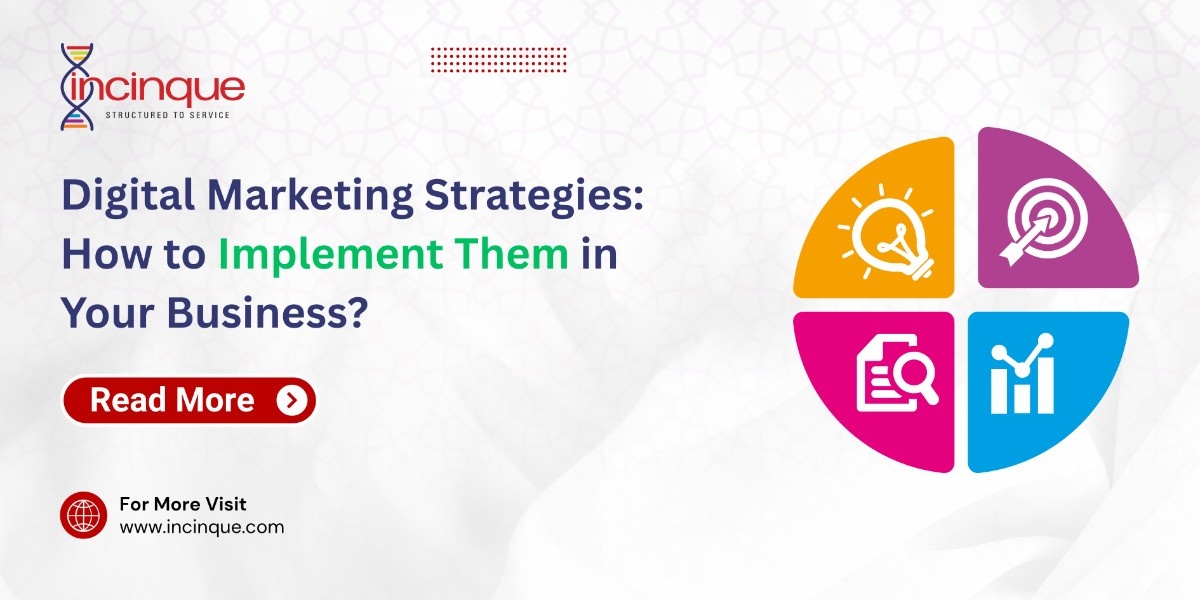
Digital Marketing Strategies: How to Implement Them in Your Business?

A circular quadrant icon featuring a lightbulb, target arrow, research document, and performance chart to illustrate digital marketing strategy execution.

Introduction

In an era where digital presence defines business success, having the right marketing strategy can make or break your brand. A strong digital marketing strategy not only helps you reach your target audience but also drives traffic, generates leads, and builds lasting relationships. Whether you’re a startup or an established enterprise, it’s essential to understand what digital marketing strategies are and how to implement them effectively.


What is a Digital Marketing Strategy?

A digital marketing strategy is a plan that outlines how your business will achieve its marketing goals using digital channels such as search engines, social media, email, websites, and paid advertising. It provides a clear roadmap for reaching potential customers online and guiding them through the buyer’s journey.


Key Digital Marketing Strategies

1. Search Engine Optimization (SEO)

Optimizing your website and content to rank higher in search engine results, increasing organic traffic and visibility.

2. Content Marketing

Creating valuable and relevant content (blogs, videos, eBooks) that attracts and retains a clearly defined audience.

3. Social Media Marketing (SMM)

Leveraging platforms like Instagram, LinkedIn, Facebook, and Twitter to engage with audiences, share content, and build a community.

4. Pay-Per-Click Advertising (PPC)

Running paid ads (e.g., Google Ads, Meta Ads) to instantly boost visibility and drive qualified traffic to your site.

5. Email Marketing

Sending personalized messages and newsletters to subscribers to nurture leads and encourage repeat purchases.

6. Influencer Marketing

Collaborating with influencers to reach new audiences and build trust through authentic recommendations.

7. Affiliate Marketing

Partnering with other businesses or individuals who promote your product for a commission on each sale.


How to Implement Digital Marketing Strategies in Your Business

Having a list of strategies is not enough  the key is implementation. Here’s a step-by-step guide to putting your digital marketing plan into action:


1. Set Clear Goals

Define what you want to achieve  more website traffic, lead generation, higher conversion rates, or brand awareness. Your goals should be SMART (Specific, Measurable, Achievable, Relevant, Time-bound).

2. Know Your Target Audience

Understand your ideal customer’s demographics, pain points, behaviors, and online habits. This helps tailor your messaging and choose the right platforms.

3. Build a Strong Online Presence

Start with a professional website, optimize your content for SEO, and maintain active social media profiles.

4. Create High-Quality Content

Develop a content calendar and create blogs, videos, reels, and graphics that educate, entertain, or solve problems for your audience.

5. Use Marketing Tools

Leverage tools like:

  • Google Analytics for performance tracking
  • HubSpot or Mailchimp for CRM and email campaigns
  • Hootsuite or Buffer for social media management

6. Run Paid Campaigns

Use platforms like Google Ads or Facebook Ads Manager to create targeted paid campaigns. Test different creatives and monitor ROI.

7. Analyze & Optimize

Regularly track your campaign performance. Measure what’s working and what isn’t. Use insights to refine your strategies and improve future results.


Common Mistakes to Avoid

  • Ignoring mobile optimization
  • Not defining your buyer persona
  • Spamming users with irrelevant content
  • Skipping analytics and not tracking performance
  • Failing to update your strategy with trends


Final Thoughts

Digital marketing strategies are not one-size-fits-all. What works for one brand may not work for another. The key to success lies in understanding your business goals, knowing your audience, and continuously testing, analyzing, and refining your efforts.

By implementing the right strategies thoughtfully and consistently, you can build a powerful digital presence that attracts, engages, and converts your audience  turning clicks into customers and browsers into brand advocates.

What is Content Marketing and Why Does Your Business Need It?

A man in a white t-shirt looking thoughtful, representing the strategic consideration of content marketing needs for a business.

Introduction

In today’s digital-first world, consumers are constantly searching for value  not just in products, but in the content they consume. That’s where content marketing comes in. It’s not just a buzzword  it’s one of the most powerful strategies for building trust, boosting brand awareness, and driving conversions. But what exactly is content marketing, and why is it crucial for your business?


What is Content Marketing?

Content marketing is a strategic approach focused on creating and distributing valuable, relevant, and consistent content to attract and engage a clearly defined audience  and ultimately, to drive profitable customer actions.

Unlike traditional advertising that pushes products directly, content marketing aims to educate, entertain, or inspire your audience  building a relationship that naturally leads to trust and loyalty.


Types of Content Marketing

There are many forms of content marketing, and the best strategies use a mix depending on the audience and goals:

  • Blogs – Informative articles that improve SEO and answer customer questions.
  • Videos – Engaging visual content for product demos, storytelling, or education.
  • Infographics – Visual summaries of data or processes that are easy to digest and share.
  • Social Media Posts – Bite-sized content to engage followers and spark conversations.
  • Podcasts – Audio content that provides insights and builds thought leadership.
  • E-books & Whitepapers – In-depth content used for lead generation and education.
  • Emails & Newsletters – Regular updates that keep your brand top of mind.


Why Your Business Needs Content Marketing

1. Builds Brand Awareness

When your content shows up in search results or social feeds, it exposes your brand to new audiences organically.

2. Drives Organic Traffic

High-quality content optimized for SEO helps you rank higher on Google, bringing in consistent, unpaid traffic over time.

3. Establishes Authority

Sharing expert insights and helpful information positions your brand as a trusted voice in your industry.

4. Supports the Buyer Journey

From awareness to consideration and decision, content guides users through every stage of the sales funnel.

5. Increases Engagement

Great content encourages likes, shares, and comments  boosting engagement and community growth.

6. Boosts Conversions

Well-crafted content can generate leads, nurture prospects, and turn visitors into paying customers.

7. Cost-Effective in the Long Run

Unlike paid ads that stop when the budget runs out, evergreen content continues to deliver value for years.


Real-World Example

Think about brands like HubSpot, Nike, or Zomato  all of them use content to connect with their audience. Whether it’s through how-to guides, inspirational videos, or humorous tweets, they create content that resonates and builds loyal communities.


Tips for Effective Content Marketing

  • Know Your Audience – Understand their needs, pain points, and preferences.
  • Create a Content Calendar – Plan and schedule your content to maintain consistency.
  • Focus on Quality Over Quantity – A few great pieces will outperform many mediocre ones.
  • Optimize for SEO – Use keywords, meta tags, and internal linking to boost visibility.
  • Track and Measure – Use tools like Google Analytics to see what’s working and adjust accordingly.


Final Thoughts

In an age where consumers are overwhelmed with ads, content marketing offers a refreshing approach  helping businesses attract and retain customers by delivering real value. It’s not about selling; it’s about connecting, educating, and building trust. If you want to stand out, grow organically, and create loyal brand advocates, content marketing is not optional it’s essential.


SEO vs PPC: Which Digital Strategy Works Best for Your Local Business?

A professional businessman in a suit pointing with a marker, illustrating the comparative analysis of choosing between SEO and PPC digital marketing strategies.

When running a local business, visibility online isn’t optional it’s survival. Two powerful strategies dominate digital marketing: SEO (Search Engine Optimization) and PPC (Pay-Per-Click advertising). But if you’re weighing SEO vs PPC Which is better? the answer depends on your goals, budget, and timeline.

What Is SEO and Why Does It Matter for Local Businesses?

SEO for local business focuses on improving your visibility in search engines like Google. It’s about ranking in organic results so customers find you without ads. Key tactics include:

  • Google Maps SEO: Optimizing your Google Business Profile to appear in the “Local Pack” for searches like “plumber near me”.

  • On-page optimization: Includes keywords, high-quality content, schema markup, internal linking, and site structure factors that can influence up to 80% of your Google rankings.

  • Local citations and reviews: Consistent NAP (Name, Address, Phone) across directories plus positive customer feedback.

For local businesses, strong SEO means more calls, visits, and leads—without paying for every single click.

What Is PPC and How Does It Help Local Businesses?

PPC for local business involves running paid ads (like Google Ads) to appear at the top of search results. You pay only when someone clicks your ad. Benefits include:

  • Instant visibility even for competitive keywords.

  • Geo-targeting to reach customers in your city or neighborhood.

  • Budget control: you decide how much to spend daily.

Unlike SEO, PPC brings immediate results, but once you stop paying, visibility disappears.

The Difference Between SEO and PPC

The difference between SEO and PPC comes down to cost structure, timing, and sustainability:

Factor SEO PPC
Cost Investment in content, optimization, and time. Pay per click. Immediate spend.
Speed Slower—results build over months. Instant traffic as soon as ads go live.
Longevity Long-term rankings bring ongoing leads. Visibility stops when budget runs out.
Trust Users often trust organic results more. Ads can look less credible to some users.

SEO vs PPC: Which Is Better for Local Businesses?

The truth: PPC and SEO marketing work best together. But if you have to choose:

  • Pick SEO if you want sustainable growth, more local visibility on Google Maps, and long-term ROI.

  • Pick PPC if you need leads fast, have a competitive niche, or want to test new markets.

  • Pick both if you want maximum exposure use PPC for quick wins and SEO for lasting authority.

Final Thoughts

For local businesses, there’s no universal winner in the SEO vs PPC debate. SEO builds long-term trust and visibility, while PPC provides speed and control. The smartest strategy often blends both investing in SEO and organic growth while using targeted PPC campaigns for instant results. For the best results, a digital marketing agency can help you combine SEO and PPC into a tailored strategy that drives measurable growth.

10 Benefits of Hiring Marketing Services Companies

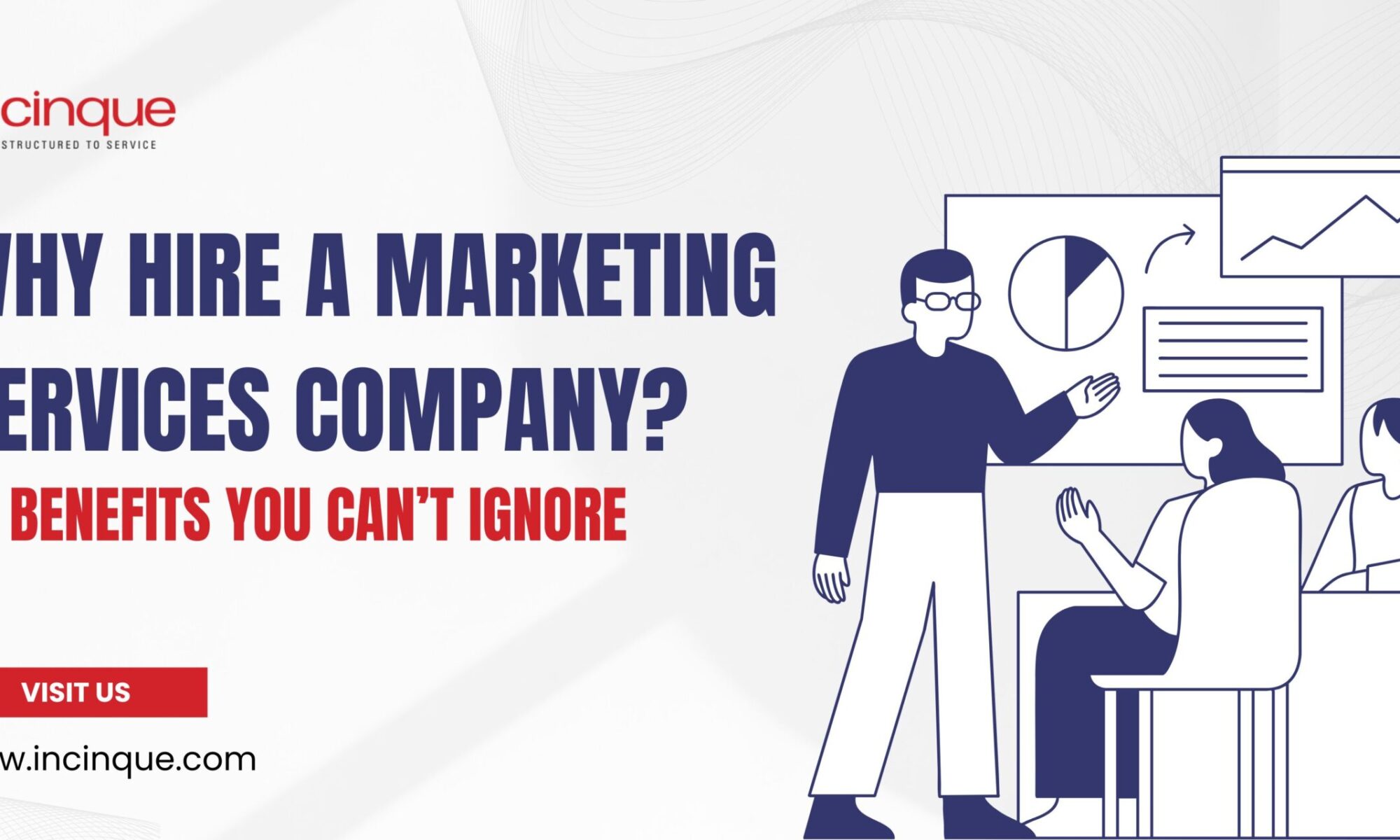
An illustration of a presenter explaining charts on a whiteboard to a seated corporate team.

In today’s digital landscape, marketing is vital for businesses to thrive. So, how can companies succeed? Employing marketing services firms may be the solution. These firms offer diverse services, from SEO to social media, covering everything. A full-stack agency provides a complete approach. They create plans to fulfill specific business needs. This aligns marketing actions with company objectives. Collaborating with a digital marketing agency has numerous benefits. They provide knowledge and know-how, leading to more impactful and creative marketing strategies. Finances are important, and using a digital marketing agency is often more economical than creating an internal team, a smart decision for several firms. Marketing service companies also offer flexibility, allowing strategy adjustments as a company expands and its marketing requirements change. This text covers the top 10 advantages of using marketing service firms, detailing how they can enhance your marketing endeavors and assist business expansion.

What Are Marketing Services Companies?

Companies that offer marketing services concentrate on promoting and building brands. They help organizations connect with their desired customers and elevate brand recognition using various marketing methods. These companies provide a comprehensive suite of services, simplifying the management of all marketing needs, spanning from traditional advertising to up-to-date digital approaches. Digital marketing services encompass SEO, pay-per-click advertising, email marketing, social media handling, and content creation. A key benefit is their capacity to tailor plans to align with each company’s specific goals, guaranteeing efficient and targeted marketing initiatives.

Here’s a quick look at common services:

  • SEO and content strategy
  • Social media management
  • PPC and online advertising
  • Brand development and reputation management
  • Data analytics and reporting


Marketing service firms are helpful collaborators that coordinate marketing approaches with company objectives to achieve successful and trackable outcomes.

1. Access to a Full Stack of Digital Marketing Services

Engaging a marketing services provider offers businesses comprehensive digital marketing assistance, covering everything from SEO to social media planning. A full-service digital marketing agency manages all areas of marketing, combining various strategies to develop a unified approach that amplifies results. These agencies also offer adaptability, enabling businesses to select only the necessary services and adjust their marketing plan to meet particular objectives.

Here are some key services often available:

  • Search Engine Optimization (SEO)
  • Pay-Per-Click (PPC) Advertising
  • Content Creation and Marketing
  • Social Media Management
  • Email Marketing Campaigns


Marketing agencies streamline operations by matching campaigns to brand objectives and guaranteeing uniform messaging across various channels. They remain current with industry developments and leverage cutting-edge tools, assisting businesses in outpacing rivals. Collaborating with a comprehensive digital marketing agency also provides strategic advantages, eliminating the necessity of overseeing several vendors and facilitating improved communication leading to superior outcomes.

2. Expertise and Industry Experience

Marketing service providers offer extensive industry know-how, employing teams of experts in various fields such as SEO, social platforms, and content creation. This blend of proficiencies assists in developing efficient strategies and inventive approaches. For smaller companies, engaging a digital marketing agency is particularly advantageous, offering access to skilled professionals and in-depth industry understanding without the expenses of an internal, full-time marketing staff. Collaborating with an agency allows businesses to leverage a wide array of capabilities and knowledge to boost their marketing initiatives.

Key benefits of agency expertise include:

  • Industry-Specific Insights
  • Data-Driven Decision Making
  • Creative Solutions for Unique Challenges
  • Understanding of Latest Marketing Trends


Marketing firms stay informed about the latest trends and consistently enhance their expertise via training and workshops. This continuous development guarantees clients receive the most impactful strategies. Briefly, they address businesses’ knowledge deficits by delivering specialized knowledge that boosts marketing performance. Collaborating with an agency means gaining from extensive industry knowledge, customized for your individual requirements.

3. Cost-Effectiveness Compared to In-House Teams

Creating an entire internal marketing team can be costly, given expenses like pay, perks, development, and resources. Conversely, using a marketing services firm is frequently more budget-friendly and adaptable—you only pay for what’s required, on an as-needed basis. Their pricing is typically more consistent, simplifying budgeting and aiding businesses in sidestepping unforeseen financial burdens. Furthermore, these firms typically have existing access to sophisticated tools and tech, which customers can utilize at no additional cost, thus optimizing overall cost-effectiveness.

Advantages of using marketing services companies:

  • Lower Hiring Costs
  • Flexible Pricing Models
  • Access to Required Tools and Technologies
  • Elimination of Training and Development Expenses


Digital marketing agencies adapt well to shifting project demands, increasing or decreasing their efforts as required. This agility helps keep expenses in line with requirements. Essentially, they offer a budget-friendly option compared to in-house teams, featuring flexible pricing and readily available resources that simplify financial planning. Companies gain access to successful marketing plans without the high costs of maintaining a complete internal team.

4. Scalability and Flexibility for Growing Businesses

Marketing demands evolve rapidly as businesses expand; a marketing services firm offers the scalability needed to stay current. Agencies adjust their offerings according to a company’s development phase, from product launches to market entries or major campaigns. They can easily ramp activities up or down without needing to add personnel, saving both time and money. This frees businesses to concentrate on broader objectives. Furthermore, agencies bring geographical adaptability, supporting companies in connecting with larger audiences and refining strategies for different regions and demographics, enhancing their expansion efforts.

Benefits of scalability and flexibility:

  • Adapting to Fluctuating Demands
  • Supporting Business Expansion and Growth
  • Efficient Resource Use Without Hiring Burdens
  • Targeting New Markets with Expertise


Marketing demands evolve rapidly as businesses expand; a marketing services firm offers the scalability needed to stay current. Agencies adjust their offerings according to a company’s development phase, from product launches to market entries or major campaigns. They can easily ramp activities up or down without needing to add personnel, saving both time and money. This frees businesses to concentrate on broader objectives. Furthermore, agencies bring geographical adaptability, supporting companies in connecting with larger audiences and refining strategies for different regions and demographics, enhancing their expansion efforts.

5. Advanced Tools, Technology, and Analytics

Marketing agencies leverage innovative technology and sophisticated analytical tools to enhance marketing initiatives – capabilities many businesses may not possess independently. These firms invest in the newest solutions for SEO, content creation, and social platforms, offering key insights to support superior choices and increase campaign success. Using real-time analytics, they can monitor progress and adapt plans rapidly, guaranteeing optimal use of marketing resources. Furthermore, companies gain access to these robust tools without the considerable expense of acquiring or operating them, which proves particularly advantageous for small enterprises aiming to cut expenses.

Advantages include:

  • Enhanced Data Analysis and Visualization
  • Improved SEO and Content Management
  • Superior ROI Tracking and Measurement
  • Automated Campaign Management Features


Sophisticated instruments assist companies in gaining deeper insights into audience actions and inclinations, maintaining their edge in the digital landscape. Teaming up with a marketing services provider enables businesses to leverage these technologies efficiently. These firms utilize the tools to build campaigns that resonate with the desired demographics, offering data-backed information that informs sharper approaches. Consequently, organizations experience enhanced visibility, increased interaction, and better marketing performance.

6. Creative and Innovative Marketing Strategies

Marketing service providers are appreciated for their originality and novel concepts, assisting brands to distinguish themselves in crowded markets. Their teams consist of talented designers, copywriters, and strategists who collaborate to build unique and compelling campaigns. With knowledge of various sectors, these firms offer different viewpoints and adjust strategies to match each company’s specific aims, leading to better and more effective outcomes.

Key benefits of their creativity include:

  • Unique branding and storytelling
  • Engaging and memorable content
  • Creative campaign designs
  • Fresh perspectives on market challenges


Marketing firms offer a different point of view, providing fresh concepts that internal teams might not consider. These inventive plans can give a brand a new life and draw in new customers. In today’s crowded market, being imaginative is vital for messaging that’s both impactful and resonates. Teaming up with an agency helps businesses regularly produce captivating content that strongly connects with their target audience.

7. Consistent Brand Messaging Across Channels

Delivering consistent brand messages is crucial for establishing trust and recognition. Marketing service providers support this consistency. They ensure a unified voice on various platforms like social media, email, websites, and traditional advertising.

The benefits of consistent messaging include:

  • Increased brand recognition
  • Strengthened customer trust
  • Clear and unified communication
  • Efficient resource utilization


When a brand’s message is consistent, the customer experience becomes better, and the company’s values and purpose are easily understood. Marketing service providers guarantee that each customer contact accurately represents the brand’s image by coordinating communication across various channels. They specialize in cross-channel methods, aiding companies in modifying their content for different media, while preserving a single, clear brand voice, thus boosting the effectiveness of marketing campaigns.

8. Time Savings and Focus on Core Business

Engaging marketing service companies frees up a business’s time, letting them concentrate on essential activities and key strategic choices. Managing all marketing internally can be challenging and costly, but agencies ease that strain with their knowledge and effectiveness. When marketing tasks are assigned to others, businesses optimize procedures, improve departmental output, and gain more time to invest in innovation and expansion.

The main advantages of time savings include:

  • Increased efficiency
  • Enhanced focus on strategic goals
  • Reduction in workload for in-house teams
  • Better allocation of resources


Marketing firms handle every aspect, from planning to implementation, guaranteeing that projects are completed promptly and up to the desired standards. This lets in-house teams concentrate on their key areas. Ultimately, collaborating with a marketing company provides reassurance, as business leaders can rely on expert management of marketing efforts while essential operations continue efficiently.

9. Staying Ahead of Trends and Compliance

The digital marketing field constantly changes, introducing new trends and updated rules. This rapid pace challenges companies trying to keep up while also handling their main business activities. Marketing service providers address these changes, helping their clients stay competitive and current. They also assist with regulatory requirements, like data privacy laws and advertising standards. This helps prevent hefty penalties and safeguards the company’s image.

With an agency’s support, businesses gain:

  • Updates on latest marketing trends
  • Guidance on compliance issues
  • Adaptation to new regulations and technologies


Companies offering marketing services offer valuable knowledge of customer behavior and market trends, which enables businesses to develop more focused and successful strategies. Through data analysis and change monitoring, these services assist companies in identifying opportunities and reducing potential risks. Working with a marketing agency gives businesses access to a skilled guide through the complicated digital realm, allowing them to remain agile, compliant, and well-positioned to take advantage of new chances.

10. Improved ROI and Measurable Results

Successful marketing aims for a solid return on investment (ROI). Marketing service providers support companies in reaching this goal. They do so by using strategies informed by data to refine campaigns and produce quantifiable outcomes. With sophisticated analytics, these firms monitor performance promptly, make quick changes to boost effectiveness, and offer businesses transparent insight into campaign successes and failures.

Key benefits include:

  • Enhanced tracking and reporting
  • Insights into customer engagement
  • Optimized campaign performance


Marketing companies leverage sophisticated resources to gather and assess data, delivering crucial knowledge about customer actions and tastes. This facilitates customizing strategies for superior performance. Success is more than just counting data; it involves understanding market trends, and skilled agencies furnish perspectives exceeding typical measurements. By teaming up with a marketing firm, companies benefit from sharper decision processes, better distribution of funds, and, in the end, enhanced financial outcomes.

How to Choose the Right Marketing Services Company

Selecting the perfect marketing services firm demands thorough investigation and assessment. Begin by establishing your objectives—such as SEO, brand development, content production, or complete digital marketing strategies. Investigate the company’s previous work and client feedback to evaluate their proficiency and trustworthiness. A capable agency should showcase successful outcomes, agility in response to changes, and a customized approach geared towards your organization. It is also important to consider if there is a good match of philosophies; a firm that understands your vision and principles will be more efficient in implementing plans. Ultimately, ask for a comprehensive plan to contrast their methods, schedules, and expected results, ensuring they can genuinely contribute to your continuous expansion.

Consider these factors when choosing:

  • Service range: Does the agency offer services that match your needs?
  • Experience: How long have they been in the industry?
  • Rates: Are their pricing models within your budget?
  • Tools and technologies: Do they use the latest technologies?
  • Communication: Is there transparency and clear communication?


Considering these elements aids in making a good decision when choosing a marketing agency. You should also have interviews or meetings with potential collaborators; these talks let you assess their proficiency and see if they share your brand’s goals. The correct match can boost your marketing and significantly fuel expansion.

Common Questions About Marketing Services Companies

When evaluating marketing service providers, companies usually have inquiries. Recognizing the potential effect of engaging them is vital. Answers can aid in their decision-making process.

Here are some frequently asked questions:

  • What services do marketing agencies typically offer?
  • How does outsourcing marketing affect control over branding?
  • What are the typical costs involved in hiring an agency?
  • How do agencies measure and report results?
  • Can an agency handle industry-specific marketing needs?


Selecting the ideal marketing partner depends on recognizing these elements, as every agency has distinct capabilities and strategies. Seek personalization aligning with your company’s requirements, and always pose detailed questions during initial discussions. A capable agency will offer straightforward explanations, demonstrate their proficiency, and be open about duties and accountabilities. Such clarity fosters trust, paving the way for a robust and effective partnership.

Conclusion: Unlocking Growth with Marketing Services Companies

Engaging a marketing services company can significantly improve your business. Utilizing customized strategies based on industry standards, agencies help businesses grow and keep their marketing efforts effective. By leveraging their knowledge and specialized tools, companies can optimize resource allocation while enabling internal teams to concentrate on their main tasks. Agencies also offer new perspectives and creative concepts that enhance brand recognition and customer interaction. Collaborating with the suitable agency leads to better returns, continuous expansion, and lasting achievement.

What Are Digital Marketing Services? Role of a Digital Marketer?

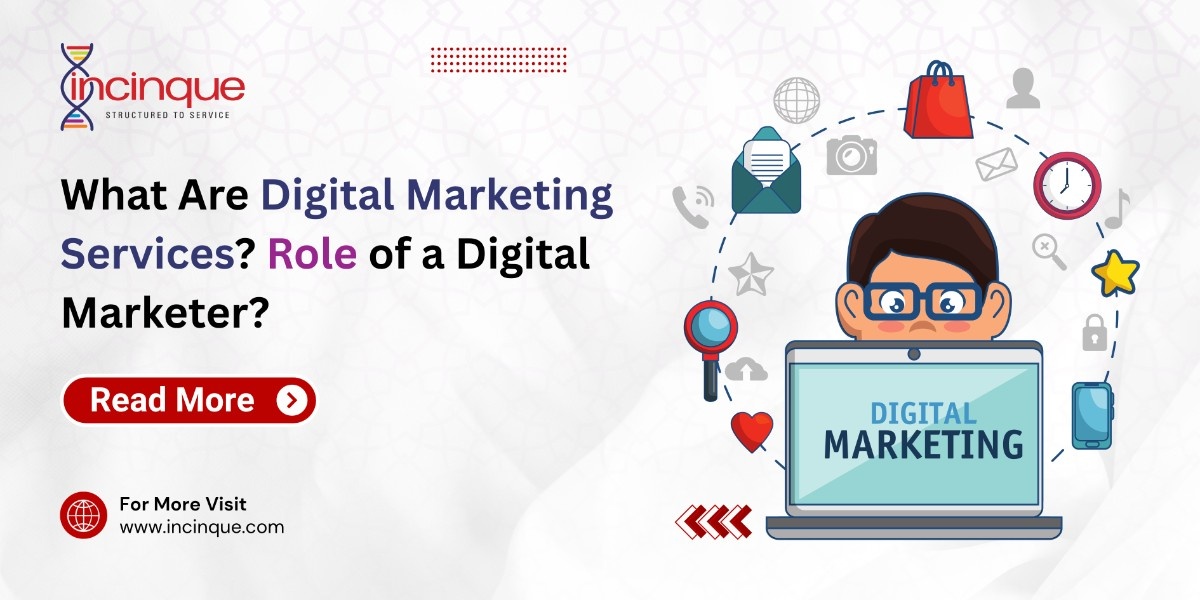
An illustration of a person working on a laptop labeled "DIGITAL MARKETING," surrounded by various digital icons like emails, shopping bags, and clocks, representing the diverse responsibilities of a digital marketer.

Introduction

In today’s hyper-connected world, businesses no longer rely solely on traditional marketing to grow. As more consumers spend time online, the need to connect, influence, and convert them through digital platforms has become essential. That’s where digital marketing services come in  offering strategies, tools, and platforms to help brands thrive in the digital space.


What Are Digital Marketing Services?

Digital marketing services refer to a broad range of online marketing activities aimed at promoting products, services, or brands through digital channels. These services use the internet and digital technologies such as computers, mobile devices, and social media platforms to reach a target audience effectively.


1. Search Engine Optimization (SEO)

SEO is the process of optimizing your website to rank higher on search engines like Google. Higher rankings mean more visibility, traffic, and potential customers.

2. Social Media Marketing (SMM)

This involves promoting your brand on platforms like Instagram, Facebook, LinkedIn, and Twitter. It includes posting content, running ads, and engaging with your audience.

3. Pay-Per-Click Advertising (PPC)

PPC allows businesses to place ads on platforms like Google Ads or social media. You only pay when someone clicks your ad, making it a cost-effective strategy for driving traffic and conversions.

4. Content Marketing

Creating and sharing valuable content (blogs, videos, infographics, etc.) to attract and engage a clearly defined audience and encourage profitable customer actions.

5. Email Marketing

Using personalized emails to nurture leads, share updates, and promote services or products. It’s one of the most direct forms of digital communication with your audience.

6. Website Design and Development

Your website is the face of your business online. A well-designed, user-friendly, and mobile-responsive website is crucial to converting visitors into customers.

7. Online Reputation Management

Managing and improving the public perception of a brand by responding to reviews, addressing complaints, and monitoring mentions across the internet.


Role of Digital Marketers

Digital marketers are the strategic minds behind successful online campaigns. Their role is not just about creating ads or posts  it’s about understanding customer behavior, crafting strategies, and optimizing digital channels for results.


1. Strategy Development

They create custom marketing strategies based on business goals, audience analysis, and market trends.

2. Audience Targeting

Digital marketers analyze demographics, behaviors, and preferences to target the right people at the right time with the right message.

3. Campaign Execution

They manage digital campaigns across multiple platforms, ensuring content is scheduled, ads are optimized, and KPIs are tracked.

4. Analytics and Reporting

Using tools like Google Analytics, marketers track campaign performance, measure ROI, and make data-driven decisions.

5. Staying Updated

Digital trends change fast. Marketers continuously learn about algorithm updates, consumer behavior shifts, and new tools to stay ahead of the curve.


Why Digital Marketing Matters

  • Wider Reach: Tap into global audiences.
  • Cost-Effective: Often cheaper than traditional methods.
  • Measurable: Track everything in real-time.
  • Engagement: Build direct relationships with your customers.


Final Thoughts

Digital marketing services are the foundation of modern business growth. From driving traffic to building lasting relationships, these services provide a scalable and measurable way to reach your audience. Digital marketers, in turn, are the architects of this success  blending creativity, data, and technology to deliver real results.

Whether you’re a small startup or a large enterprise, investing in digital marketing isn’t just a smart move  it’s essential for staying relevant and competitive in today’s digital-first world.

What are the Benefits of B2B Demand Generation?

A business leader presenting growth charts on a screen to an audience during a corporate meeting about marketing outsourcing.

In the moment’s competitive business, Now businesses are constantly looking for ways to stay ahead of the wind. One of the most effective strategies is B2B demand generation. But what exactly does this term mean, and how can it profit your business? Let’s explore the world of B2B demand generation and uncover its multitudinous advantages.

What is B2B Demand Generation?

B2B demand generation refers to the marketing sweats aimed at creating interest and mindfulness in a company’s products or services. It focuses on erecting a strong channel of implicit leads and turning them into pious guests. Unlike traditional marketing, demand generation is a comprehensive approach that combines colorful marketing tactics to drive engagement and grow deals.

Key Components of Demand Generation

Lead Generation

The process of attracting and landing implicit guests’ interest. This is generally done through content marketing, SEO, social media, and other digital marketing strategies.

B2B Appointment Setting Services

These services help companies record meetings with implicit guests, icing that deals brigades have a steady sluice of good leads.

Client Acquisition Strategies

These are the ways used to convert implicit leads into paying guests. This might include substantiated marketing, nurturing juggernauts, and targeted elevations.

Benefits of B2B Demand Generation

Increased Deals and Profit

Demand generation strategies are designed to fill your deals channel with high-quality leads. By nurturing these leads and guiding them through the deals channel, businesses can significantly increase their conversion rates and, accordingly, their profit.

Bettered Client Targeting

One of the major benefits of B2B demand generation is the capability to target specific client parts. By understanding your followership’s requirements and preferences, you can conform your marketing sweats to reverberate with them more effectively. This targeted approach ensures that your communication reaches the right people at the right time.

Enhanced Brand Mindfulness

Demand generation not only focuses on generating leads but also on erecting brand mindfulness. By constantly participating in precious content and engaging with your followership, you can establish your brand as an authority in your assiduity. This increased visibility can lead to further organic business and eventually more leads.

More Alignment Between Deals and Marketing

For a business to succeed, deals and marketing brigades must work hand in hand. Demand generation creates a flawless connection between these departments, icing that both are aligned in their pretensions and strategies. This alignment leads to a more effective lead nurturing process and an advanced conversion rate.

Cost-Effective Marketing

Compared to traditional marketing styles, demand generation is frequently more cost-effective. By fastening on digital channels and using data analytics, businesses can reach a larger followership at a bit of the cost. This effectiveness allows companies to maximize their return on investment (ROI).

Enforcing Effective Demand Generation Strategies

Content Marketing

In terms of demand generation, content rules first. By creating precious, instructional, and engaging content, you can attract implicit leads and nurture them throughout their buyer’s trip. Blog posts, whitepapers, case studies, and webinars are all excellent content types to consider.

Hunt Machine Optimization (SEO)

SEO is pivotal for perfecting your website’s visibility on hunt machines. By optimizing your content for applicable keywords and icing that your point is stoner-friendly, you can attract further organic business and induce further leads.

Social Media Marketing

Social media platforms offer a unique occasion to engage with your followership and make connections. By participating in precious content and sharing in exchanges, you can increase brand mindfulness and drive further business to your website.

Dispatch Marketing

Dispatch marketing remains one of the most effective ways to nurture leads and keep your followership engaged. By transferring substantiated and applicable content directly to your subscribers’ inboxes, you can make trust and guide them through the deals channel.

B2B Lead Generation and Appointment Setting Services

Partnering with a superementing generation company can help streamline your demand generation. These companies specialize in relating implicit leads, qualifying them, and setting up movables with your deals platoon. This allows your business to concentrate on closing deals and growing profit.

Measuring the Success of Your Demand Generation Sweats

To ensure that your demand generation strategies are working, it’s essential to track crucial performance pointers (KPIs). Some important KPIs to cover include:

  • Lead Conversion Rate – The chance of leads that convert into guests.
  • Cost Per Lead – The total cost of acquiring a lead, divided by the number of leads generated.
  • Client Acquisition Cost (CAC) – The total cost of acquiring a client, including marketing and deals charges.
  • Return on Investment (ROI) – The overall profitability of your demand generation sweats.

By regularly assaying these criteria, you can identify areas for enhancement and optimize your strategies for better results.

Conclusion

B2B demand generation is an important tool for businesses looking to grow their deals and profit. By enforcing effective demand generation strategies, you can attract high-quality leads, ameliorate client targeting, and enhance brand mindfulness. Likewise, the alignment between deals and marketing brigades ensures a flawless lead nurturing process, performing in advanced conversion rates and increased profit.

In the ever-evolving world of B2B marketing, demand generation stands out as a cost-effective and effective approach to driving deals growth. By fastening on the right strategies and continually measuring your success, your business can unleash the full eventuality of demand generation and achieve long-term success.

For businesses seeking expert support in implementing demand generation strategies, Incinque Solutions can be a trusted partner to drive measurable growth.

Advanced Google Analytics Techniques for Marketers to Improve Results

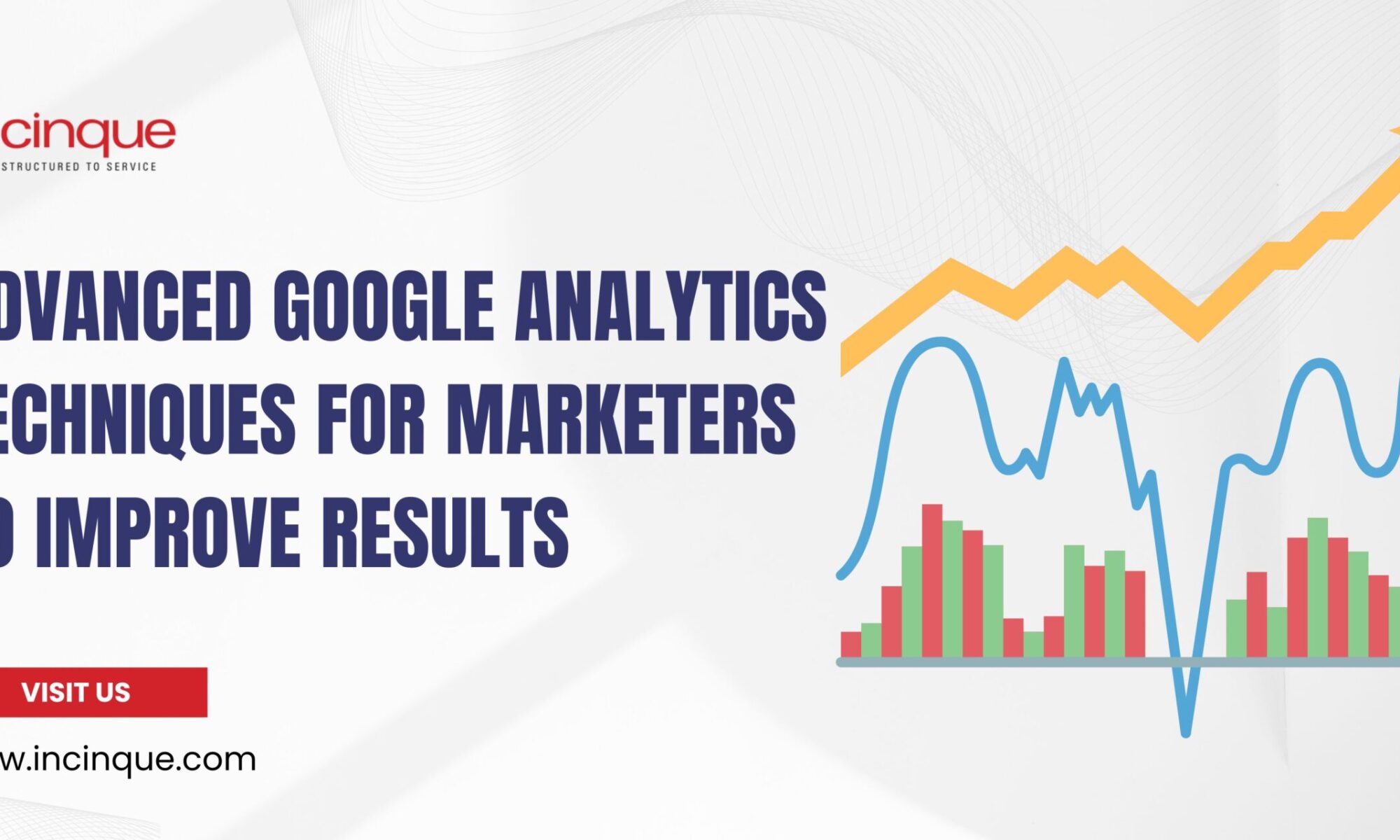
A vibrant multi-line growth chart showcasing upward trending web traffic to represent advanced Google Analytics techniques for marketers.

Google Analytics is becoming a very useful marketing tool. Beyond monitoring visits and clicks, it offers insights into user behavior and website performance. Yet, solely focusing on basic metrics limits potential. To unlock its full power, marketers should explore advanced Google Analytics strategies for richer insights and more in-depth data analysis.

Going beyond simple reports allows for the identification of hidden trends, optimization of campaigns, and making more informed data-driven decisions, leading directly to marketing success.


Why These Techniques Matter

In today’s rapidly changing digital world, sophisticated Google Analytics 4 (GA4) methods enable marketers to go beyond the fundamentals. They provide more profound insights into user behavior, which in turn allows for strategy adjustments and enhanced performance. Utilizing features like AI-powered projections, these techniques can forecast trends; however, they are most effective when customized to fit particular business objectives.

Getting Started Simply

Start with GA4’s improved measurement feature for automatic event collection, and then add custom configurations. For support, check Google’s Analytics Help or find free tutorials on platforms such as YouTube for detailed instructions.

Balancing Insights and Action

To excel in digital marketing, the focus is on gaining useful insights that fuel genuine expansion, rather than just counting website visits. In 2025, Google Analytics 4 (GA4) has become a must-have tool for marketers, combining advanced event tracking with AI capabilities to refine campaigns and boost user interactions. This guide presents top GA4 strategies, incorporating recent advancements like AI-driven insights, more integrations, and predictive analytics. These approaches help turn raw data into strategic advantages, whether refining audience segments or estimating ROI. We’ll explore fundamental setups, advanced tools, and optimization advice, with an SEO focus on “advanced Google Analytics techniques,” “GA4 marketing optimization,” and “Google Analytics 4 tips for 2025.”


The Evolving Role of GA4 in Marketing Strategies

Google Analytics has long been a key tool for assessing online performance, but GA4 enhances this by concentrating on user-based information rather than session-oriented measures. As privacy laws such as GDPR (General Data Protection Regulation) and CCPA (California Consumer Privacy Act) become stricter, especially in 2025, GA4’s focus on consent-mode monitoring and machine learning assists marketers in staying compliant while gaining deeper understandings. This change enables cross-device journey assessments, displaying how users interact across web, apps, and even offline channels. For marketers, this means pinpointing not just who visits your site, but the reasons behind their engagement or lack thereof resulting in more focused campaigns. Studies show that businesses using these sophisticated functionalities often experience boosts in conversion rates, because they can identify trends like seasonal user behaviors or channel integrations that standard reporting misses.

Main advantages include recognizing overlooked patterns, like mobile versus desktop differences, and leveraging predictive metrics to estimate churn or purchase potential. However, success relies on correct setup errors can lead to imprecise data, emphasizing the need for comprehensive configurations.

Building a Strong Foundation: Essential GA4 Configurations

Prior to exploring advanced Google Analytics strategies, verify your GA4 property is configured for accurate results. If transitioning from Universal Analytics, completely discontinued by 2024, create a fresh property. Integrate the tracking code using Google Tag Manager (GTM) on all site pages, this ensures straightforward event tracking without complex code.

Key setup tasks include:

  • Setting the appropriate time zone, currency, and data retention options (up to 14 months is normal).
  • allowing advanced measurement to automatically track events including scrolls, outbound clicks, and file downloads.
  • Defining conversions for essential actions, like form submissions or purchases, for evaluating business performance.
  • Enabling site search tracking to record internal queries, revealing content gaps or site navigation problems.
  • Setting custom alerts for anomalies, such as unexpected traffic declines, to stay informed.

These initial configurations are crucial for data integrity. Professionals in the field suggest that a properly set-up GA4 can increase data accuracy by 30-50%, and it minimizes data sampling in large datasets. For e-commerce websites, quickly enable enhanced e-commerce tracking to track shopping activities such as abandoned carts.

Diving Deeper: Advanced Segmentation for Targeted Insights

GA4’s advanced segmentation helps marketers dissect the “all users” metric into insightful segments, revealing behavioral details. Compared to earlier versions, the Explorations area in GA4 provides versatile segments for users, sessions, and events.

Create segments based on:

  • Demographics (e.g., age groups showing higher engagement).
  • Geography (e.g., regional performance variations).
  • Behavior (e.g., high-value users with multiple sessions).
  • Technology (e.g., mobile users with higher bounce rates).

This method unveils concealed trends, similar to how repeat visitors convert at double the rate of first-timers, thus supporting tailored marketing. Use segments within reports for comparisons, like city versus countryside audience data, to customize content or ads as needed.


Segmentation Category Example Application Potential Marketing Insight
Demographic Age 18-34 vs. 35+ Younger groups favor video content, informing format choices.
Behavioral Engaged users (session time > 2 min) These segments drive 70% of conversions; prioritize remarketing.
Geographic By country or city Higher eCommerce in urban areas; localize promotions.
Technographic Device type (mobile/desktop) Mobile drop-offs at checkout; optimize for smaller screens.


Custom Events, Dimensions, and Metrics: Tailoring Data to Your Needs

GA4’s built-in metrics are a foundation; however, custom components tailor tracking to individual business needs. Custom dimensions record specific traits, like user roles or content classification, whereas custom metrics quantify events like video viewing time.

Event tracking goes past just page views, encompassing actions such as button clicks, video plays, or PDF file downloads. This is achieved through GTM by defining events (for example, “lead_submit” for forms) and including parameters to give further details. This produces a detailed dataset, providing an advantage in understanding user behavior, like monitoring behaviors of logged-in users versus guests to classify valuable customers.

Visualizing Journeys: Funnel and Path Analysis

To minimize user frustration, it’s important to understand customer journeys. GA4’s Funnel Exploration tool illustrates steps, from “view_product” to “purchase,” and shows where people leave or how long they take. Path Exploration identifies starting/ending spots and unpredicted paths.

Keep track of things that cause problems (e.g., cart abandonment rates). Use this information to improve pages or forms. This type of analysis makes it easier for customers to convert; improvements can increase conversions by as much as 20% when snags are dealt with.

Attribution Modeling: Assigning Credit Across Channels

Conversions typically have various touchpoints, so GA4’s attribution models share the value accordingly. Available models are last-click (final interaction), first-click (initial), linear (equal distribution), time-decay (weighted toward recent), and data-driven (AI-powered, standard).

Multi-channel funnels highlight interplay, like social media introducing users and email finalizing sales. Upcoming 2025 updates classify touchpoints into assist and last-touch for a better understanding, which helps with budget decisions. Compare models within Advertising reports to make informed investments in impactful channels.


Model Type Key Strength Ideal Use Case
Last-Click Simple, credits closer Direct-response ads
First-Click Highlights awareness Brand-building efforts
Linear Balanced view Multi-channel campaigns
Data-Driven AI-optimized Complex, data-rich journeys


Enhanced eCommerce and Site Search: Decoding User Intent

Enhanced eCommerce for online stores monitors what boosts sales, how users interact with their carts, and the effect of promotions. Analyzing site search uncovers common search terms, informing how to improve navigation or what products to add. These functionalities help to understand user intent; for example, if “pricing” is often searched, it highlights areas needing more content, leading to better products and fewer abandoned carts.

Seamless Integrations: Amplifying GA4’s Power

Google Analytics 4 connects with Google Ads to follow campaigns, Looker Studio to create dashboards, and BigQuery for in-depth analysis. Future expansions planned for 2025 feature Reddit, TikTok, and Snap to observe the whole customer journey, allowing for post-view conversion measurement. Connect CRMs for complete customer overviews, supporting well-informed choices.

Custom Dashboards, Alerts, and Reporting: Staying Efficient

Instead of manually searching, create custom dashboards for your key performance indicators, like conversion rates broken down by channel. Set up notifications for sudden increases and automate report generation to track trends. This way of working saves you time and helps you spot chances for improvement.

Harnessing AI in GA4: The 2025 Game-Changer

GA4’s AI tools, such as insights explaining data changes and KPI forecasts, dramatically improve optimization. Scenario planning models budget effects, and an AI chatbot is coming to answer questions easily. Anticipatory audiences predict behavior, but need enough data to be reliable.

Tips for Continuous GA4 Optimization

Don’t just set up GA4 and then forget about it. Review it quarterly to ensure data accuracy. Explore new features, such as audience triggers. Make sure to follow all privacy regulations. Use BigQuery for in-depth analysis, and keep up with the latest developments by checking Google’s blog.

Optimization Area Actionable Tip Expected Benefit
Data Audit Review setups every 3 months Ensures 95%+ accuracy in reports
AI Experimentation Test predictive metrics Anticipates 20-30% of churn risks
Integration Checks Link non-Google platforms Reveals full media impact
Privacy Compliance Enable consent mode Builds user trust, avoids fines

Conclusion: Transforming Data into Marketing Mastery

In 2025, mastering sophisticated Google Analytics approaches enables marketers to monitor, forecast, and perfect user experiences for peak performance. Employing custom segmentation, AI-powered analysis, and multi-channel attribution, GA4 transforms data into a strategic resource, yielding improved ROI and a competitive advantage. Implementing these techniques, from initial setup to constant enhancements, readies you for lasting digital triumph in a dynamic environment.

For those aiming to excel in Google Analytics, think like an SEO content creator, or want expert consultation, Incinque Solution offers customized strategies and assistance.

What is B2B and B2C: What are B2B Services?

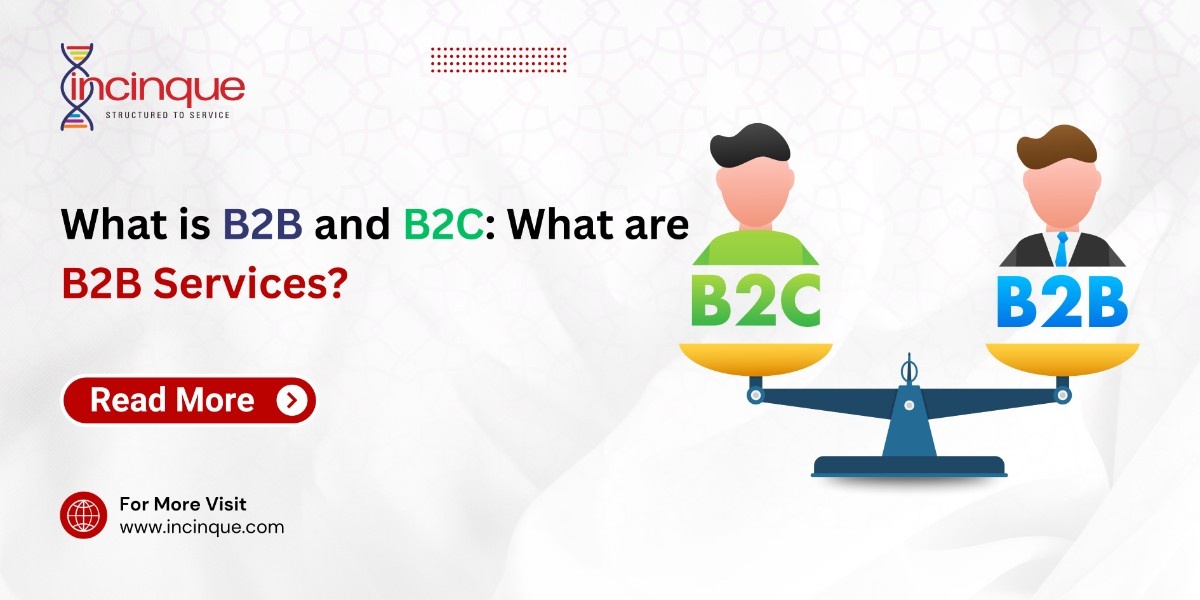
An illustration featuring a balance scale weighing B2C and B2B models, representing the comparison between business-to-consumer and business-to-business services.

In the world of commerce, businesses interact with each other and with consumers in different ways. Two common business models that define these interactions are B2B (Business-to-Business) and B2C (Business-to-Consumer). Understanding the differences between these models is crucial for anyone involved in sales, marketing, or entrepreneurship.

In this guide, we’ll explore what B2B and B2C mean, highlight their key differences, and take a closer look at the types of B2B services, including essential solutions such as B2B demand generation services and digital marketing services that power growth in today’s competitive market.

What is B2B (Business-to-Business)?

B2B refers to a business model where one business sells products or services to another business. These transactions typically involve large quantities, longer decision-making processes, and customized solutions. Examples include:

  • A software company selling CRM tools to other companies

  • A wholesaler supplying raw materials to a manufacturer

  • A marketing agency offering services to startups or enterprises

B2B focuses on building long-term relationships, offering value-driven services, and meeting the specific operational needs of businesses. Many companies in this space invest in B2B demand generation services to attract qualified leads, nurture prospects, and convert them into high-value clients.

What is B2C (Business-to-Consumer)?

B2C, on the other hand, refers to a business model where a company sells products or services directly to individual consumers. These transactions are generally more emotional and less complex than B2B. Common examples include:

  • E-commerce websites like Amazon selling products to customers

  • Restaurants serving food to walk-in guests

  • Clothing brands marketing directly to consumers via social media

B2C businesses focus on branding, customer experience, and rapid service to attract and retain individual buyers.

Key Differences Between B2B and B2C

Feature B2B B2C
Target Audience Other businesses Individual consumers
Purchase Volume Large and bulk orders Smaller, single-item purchases
Sales Process Longer, more complex Quick, emotion-driven
Relationship Focus Long-term and value-based Transactional and convenience-based
Marketing Strategy Educational, ROI-focused content Emotional, visual, and brand-driven

What are B2B Services?

B2B services are professional solutions offered by one business to help another operate more efficiently, increase productivity, or grow revenue. These services span industries including technology, marketing, logistics, finance, and consulting.

One of the most in-demand categories today is B2B demand generation strategies designed to help companies identify and engage potential clients, increase brand visibility, and generate high-quality leads.

Common Types of B2B Services

  1. Digital Marketing Services
    Agencies provide SEO, content marketing, social media management, PPC advertising, and branding strategies tailored for business growth. These services are essential for both lead generation and long-term brand building.

  2. IT & Software Solutions
    SaaS platforms, CRM systems, cloud storage, cybersecurity, and software development to optimize business processes.

  3. Consulting Services
    Business consultants improve strategies, operations, human resources, and management practices.

  4. Financial Services
    Accounting, payroll management, tax planning, financial auditing, and investment consulting.

  5. Logistics & Supply Chain Management
    Shipping, warehousing, inventory management, and freight services that ensure efficient delivery of goods.

  6. Manufacturing and Wholesale
    Supply of raw materials, components, or finished products to retailers or other manufacturers.

  7. Professional Training & Development
    Corporate training programs, leadership coaching, and skills development workshops for employees.


Final Thoughts

Both B2B and B2C models are essential to the global economy. While B2C focuses on satisfying individual needs and emotions, B2B emphasizes lasting partnerships and solving complex business challenges.

Among B2B services, stand out as critical growth drivers helping businesses capture quality leads, strengthen brand presence, and maximize revenue potential.

Whether you’re a business owner, marketer, or entrepreneur, understanding these models and leveraging the right services will give you a competitive edge and help you connect with the right audience at the right time.

Digital Marketing Agency for Small Businesses

A laptop screen displaying digital marketing text surrounded by floating vector icons for phone support, shopping carts, settings, and lock security.

Introduction

In today’s competitive digital landscape, small businesses often struggle to stand out. With limited resources and stiff competition, gaining online visibility can feel overwhelming. That’s where a digital marketing agency for small businesses steps in  offering expert solutions to help small brands grow online, reach the right audience, and increase revenue.


Why Small Businesses Need Digital Marketing

Unlike large corporations, small businesses can’t afford to waste marketing budget on trial and error. Every rupee or dollar needs to be spent strategically. Digital marketing helps in:

  • Targeting the right audience
  • Generating quality leads
  • Improving brand awareness
  • Boosting website traffic
  • Maximizing ROI

A specialized agency understands the challenges small businesses face and offers tailored strategies that fit tight budgets while delivering real results.


What Services Do Digital Marketing Agencies Offer?

Here are the key services a small business can benefit from:

  • Search Engine Optimization (SEO): Helps your website rank higher on Google, bringing in organic traffic without paying for ads.
  • Social Media Marketing: Engages your target audience on platforms like Instagram, Facebook, and LinkedIn  building trust and increasing followers.
  • Google Ads & PPC: Quick visibility through paid campaigns that generate immediate leads and conversions.
  • Content Marketing: Blogging, infographics, videos  all aimed at educating and engaging your audience while improving SEO.
  • Website Design & Optimization: Mobile-friendly, fast, and conversion-focused websites built to support your business goals.


Benefits of Hiring a Digital Marketing Agency

Hiring an agency isn’t just about outsourcing work  it’s about gaining a strategic partner. Here’s what you gain:

  • Expertise & Experience: Avoid common marketing mistakes.
  • Time Savings: Focus on your business while professionals handle marketing.
  • Access to Tools & Tech: Leverage analytics, automation, and design software without buying it yourself.
  • Scalable Solutions: Start small and scale as your business grows.


How to Choose the Right Agency

When selecting a digital marketing agency, consider the following:

  • Industry Experience
  • Transparent Pricing
  • Custom Strategy (Not One-Size-Fits-All)
  • Proven Case Studies or Testimonials
  • Clear Communication and Reporting

A good agency will treat your brand like its own  staying proactive, adaptive, and goal-driven.


Conclusion

Small businesses are the backbone of our economy, and in the digital age, online visibility is not a luxury  it’s a necessity. Partnering with the right digital marketing agency for small businesses can be the difference between staying stagnant and growing sustainably. If you’re ready to elevate your brand’s online presence, now is the time to take action.

Why SEO Audit Services Are Essential for Your Business Growth

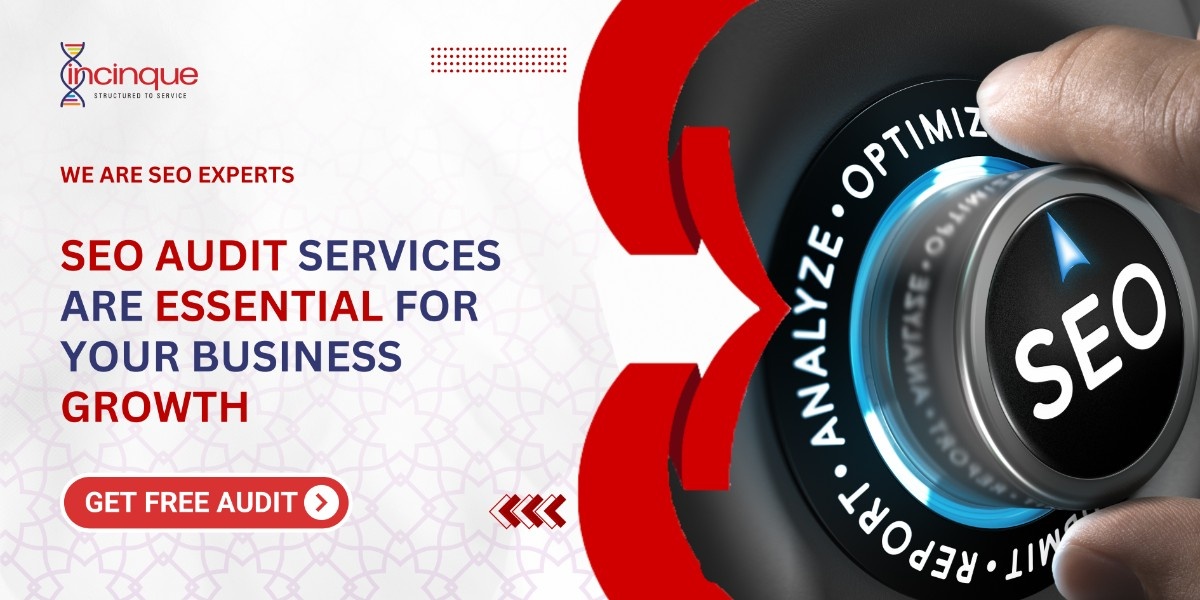
A hand turning a dial labeled "SEO," symbolizing the expert analysis and optimization process involved in professional SEO audit services.

Introduction

In today’s competitive online space, simply having a website is not enough. If people can’t find your site on Google, you’re losing opportunities. This is where SEO audit services step in. Think of them as a digital health check for your website—spotting issues, fixing gaps, and boosting performance.

What Are SEO Audit Services?

In simple terms, SEO audit services are a comprehensive evaluation of your website’s search engine performance. These services examine everything from page speed and mobile usability to broken links and keyword optimization.

Most importantly, an SEO audit highlights where your website stands and what actions are needed to improve it.


Why Should You Care About an SEO Audit?

You might be wondering do I really need this? The answer is yes. Here’s why:

  • They reveal hidden problems: For example, broken links or slow-loading pages often go unnoticed but affect both SEO and user experience.
  • They enhance website performance: A clean, optimized site not only ranks higher but also keeps visitors engaged longer.
  • They help you stay competitive: With regular audits, your site remains aligned with the latest Google algorithm updates.
  • They boost ROI: More visibility often leads to more qualified traffic, and eventually, more sales.

Moreover, a solid audit lays the foundation for every SEO strategy moving forward.

If you’re not sure where to start, Incinque offers personalized SEO support tailored to your business goals.


What Do SEO Audit Services Include?

While audit services may vary slightly between providers, a good SEO audit typically covers:

  • Technical SEO Checks: This includes reviewing your site’s crawlability, loading speed, mobile optimization, and indexing issues.
  • On-Page SEO Review: Here, everything from meta tags and headings to image alt text and internal linking is evaluated.
  • Off-Page SEO Analysis: Factors like backlinks, domain authority, and brand mentions across the web are reviewed.
  • Content Audit: Old, duplicate, or low-value content is flagged for improvement or removal.
  • Competitor Comparison: This shows how your site performs compared to your top industry competitors.

In addition, platforms like SEMrush or Moz can give you an idea of what these reports look like. However, for real impact, customized human-led audits work best.


Choose the Right SEO Partner

It’s important to partner with an agency that doesn’t just identify problems but also helps you fix them. At Incinque, we combine smart tools with expert insights to create actionable plans for your SEO success.

After all, results come from strategy, not guesswork.


Conclusion: Why SEO Audit Services Are a Smart Investment

To sum it up, SEO audit services aren’t just for big brands they’re essential for anyone looking to grow online. When done right, they uncover hidden issues, improve rankings, and ultimately drive more traffic to your site.

Ready to take control of your website’s performance? Let Incinque help you uncover what your site really needs to succeed.

shape
Our Clientele

Trusted by Leading Brands