I N C I N Q U E

Loading

AI’s Role in Changing Tech Recruitment Strategies

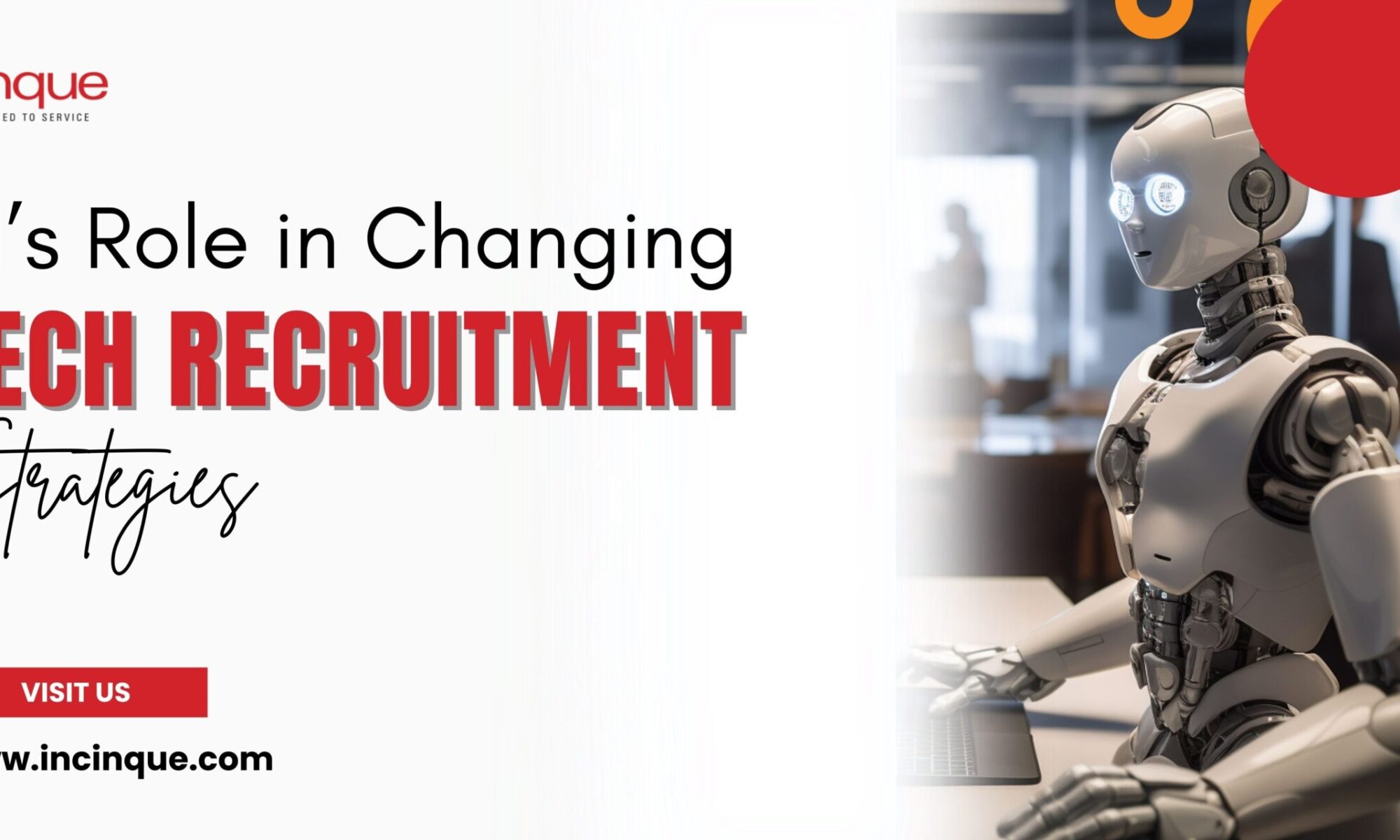
An AI robot typing on a laptop to optimize and automate tech recruitment strategies.

Technology hiring isn’t what it used to be. A few years ago, recruitment meant posting job ads, waiting for resumes, and hoping the right candidate appeared. Today, things move faster – roles evolve quickly, skills change constantly, and businesses need smarter hiring approaches. That’s where AI is reshaping modern IT hiring services and completely changing how companies find talent.

Many organizations struggling with affordable IT hiring solution challenges are now turning to AI-driven recruitment tools to simplify complex hiring processes and stay competitive.

From Manual Hiring to AI-Powered Hiring Staff

Recruiters used to spend hours reviewing resumes manually. It was slow, repetitive, and often inconsistent. Now, AI-powered hiring staff tools analyze thousands of profiles in minutes. They match skills, experience, and even behavioral patterns to job roles –  helping recruiters focus on meaningful conversations rather than paperwork.

This shift doesn’t remove human judgment. Instead, it enhances it. Recruiters still make final decisions, but AI helps shortlist candidates faster and more accurately.

How AI Is Changing Technology Hiring Models

Traditional hiring models relied heavily on past job titles or degrees. But technology roles are evolving too quickly for that approach. AI tools evaluate real skills – coding patterns, certifications, portfolio work, and learning ability – rather than just resumes.

This is one of the biggest ways AI is changing technology hiring models today. Companies are moving from role-based hiring to skill-based hiring. That means startups and enterprises can discover hidden talent who may not fit traditional hiring molds but have strong technical potential.

Solving the 15 Common Challenges Faced by IT Recruitment Agencies

Many 15 common challenges are facing IT recruitment agency teams today – from talent shortages to long hiring cycles. AI helps reduce several of these barriers:

  • Speeds up candidate screening and reduces hiring time
  • Improves technical assessment accuracy
  • Identifies passive candidates from multiple platforms
  • Predicts candidate success based on data trends
  • Reduces bias through structured evaluation frameworks

Instead of relying only on intuition, recruiters now combine human experience with data-backed insights.

Making IT Hiring Services More Affordable and Efficient

One of the biggest concerns businesses face is cost. Hiring mistakes are expensive – both financially and operationally. AI reduces unnecessary hiring cycles, improves candidate matching, and minimizes time spent on unqualified applicants.

This creates a more affordable IT hiring solution for growing companies that need skilled tech professionals without expanding large internal HR teams. Automated workflows also reduce repetitive administrative work, allowing recruiters to focus on strategy and relationship building.

Data-Driven Decision Making in Recruitment

AI doesn’t just help with sourcing candidates. It also provides valuable insights into hiring trends. Companies can track:

  • Which job descriptions attract the best candidates
  • Which hiring channels generate high-quality applicants
  • Time-to-hire performance across roles
  • Market salary benchmarks and talent availability

These insights help businesses refine their recruitment strategies continuously – making IT hiring services more predictive rather than reactive.

Balancing Technology with the Human Touch

While AI brings speed and structure, successful recruitment still depends on human empathy. Culture fit, communication skills, and long-term career alignment require human conversations. The best technology staffing strategies combine AI efficiency with human understanding.

Companies that treat AI as a support system – not a replacement – tend to achieve better hiring outcomes.

The Future of Tech Recruitment

As AI continues to evolve, recruitment will become more personalized and proactive. Predictive analytics may soon suggest hiring needs before teams even realize they need new talent. Automated skill assessments will become more dynamic, and remote hiring processes will become even smoother.

For businesses, this means faster access to skilled professionals. For recruiters, it means more time to focus on building strong relationships rather than managing spreadsheets.

Final Thoughts

AI is no longer just a buzzword in recruitment – it’s becoming a foundational part of modern IT hiring strategies. From improving candidate matching to reducing hiring costs, AI-powered hiring staff tools help companies overcome traditional hiring challenges and build stronger technical teams.

Organizations that adapt early – combining advanced technology with experienced recruiters – are better positioned to attract top talent and stay competitive in an evolving digital workforce.


5 Major Benefits and Challenges of IT Staffing Services

An IT recruitment manager interviewing a technical candidate for a staffing service.

Hiring technology talent often feels like chasing a moving target. One month you need a cloud engineer, the next you’re scrambling for a cybersecurity specialist, and somewhere in between your developers are stretched thin. That pressure is why many organizations turn to IT staffing services – not just for speed, but for sanity.

Still, staffing is not a silver bullet. It can be incredibly effective, but only when businesses understand both the upsides and the trade-offs.

The Real Benefits of IT Staffing Services

1. Faster Access to Skilled Talent

One of the most noticeable benefits of IT staffing is how quickly qualified candidates enter the conversation. Instead of starting from scratch every time a role opens, companies gain access to talent pools that IT staffing agencies have been building for years.

When deadlines are looming and teams are overloaded, that speed can prevent delays, burnout, and missed opportunities.

2. Flexibility Without Long-Term Commitment

Business demand rarely stays flat. Some quarters require rapid expansion, while others call for tighter teams. IT workforce solutions make it easier to scale up for a major project and scale down when the workload stabilizes.

A tech staffing company can provide contract or project-based professionals, giving businesses room to adapt without committing to permanent headcount they may not need later.

3. Lower Hiring Overhead

Internal hiring quietly drains time and money. Job postings, screening software, recruiter hours, interviews, onboarding – none of it is free.

With IT staffing services, many of these costs are consolidated into a predictable model. For companies managing tight budgets, that clarity can make hiring feel manageable instead of chaotic.

4. Access to Specialized Skills

Technology evolves faster than most hiring processes. Suddenly, a company needs expertise in AI, DevOps, or cloud-native architecture – and the internal team doesn’t know where to start.

IT talent acquisition teams at staffing firms specialize in finding niche skills. They know how to evaluate technical depth and connect with professionals who are not actively applying for jobs but are open to the right opportunity.

5. Strategic Hiring Support

The best IT staffing firms don’t just send resumes. They act as an IT staffing and consulting partner, helping organizations plan future hiring, understand talent market trends, and build sustainable pipelines.

This strategic support often turns reactive hiring into proactive workforce planning.

The Challenges Businesses Should Expect

1. Skill Mismatch Is Still Possible

Not every staffing provider evaluates candidates with the same rigor. Without strong technical screening, there is always a risk of hiring someone who looks great on paper but struggles in real-world projects.

Choosing an experienced IT staffing agency with structured assessments reduces this risk – but it never disappears completely.

2. Cultural Fit Takes Work

Temporary or contract professionals may not immediately feel connected to the team. Without clear onboarding and communication, collaboration can feel fragmented.

Culture doesn’t come from a contract. It comes from intentional integration and clear expectations.

3. Vendor Dependency

Relying too heavily on a technology staffing company can create dependency, especially if internal hiring capabilities are neglected. If priorities shift or a vendor relationship changes, companies may feel exposed.

A balanced approach – combining internal hiring with external staffing – often works best.

4. Premium Costs for Niche Roles

Specialized technology skills come at a premium. While IT staffing services reduce recruitment overhead, niche expertise in areas like AI, cybersecurity, or cloud infrastructure can still be expensive.

Long-term planning and workforce forecasting help control these costs over time.

5. Compliance and Contract Complexity

Contract staffing involves legal terms, payroll structures, and employment regulations, especially when working with remote or global talent. Without proper processes, compliance can become complicated.

A reliable IT staffing agency typically manages contracts, documentation, and regulatory requirements, reducing administrative burden and risk.

How to Choose the Right IT Staffing Partner

Not all staffing providers operate at the same level. Businesses should look for:

  • Deep understanding of technology roles and industries
  • Strong technical screening and evaluation processes
  • Flexible staffing models for contract and permanent roles
  • Compliance and payroll management capabilities
  • Proven delivery track record and references

Speed is important, but understanding, quality, and fit matter far more.

Final Thoughts

IT staffing services can be a powerful tool for modern businesses. They offer speed, flexibility, and access to specialized talent that internal teams often struggle to source on their own. When companies partner with the right recruitment service, hiring becomes less reactive and more strategic.

At the same time, staffing requires thoughtful partnership, clear onboarding, and realistic expectations. Companies that treat staffing as a long-term collaboration – rather than a quick transactional service – tend to build stronger, more resilient teams.

In the end, IT staffing is not just about filling roles. It’s about building teams that can adapt, innovate, and deliver in an environment where technology – and expectations – never stop evolving.

shape
Our Clientele

Trusted by Leading Brands