I N C I N Q U E

Loading

Load Board Management: Why US Freight Brokers Are Outsourcing It

Load board management for US freight brokers with logistics professional and shipping icon.

Just ask a veteran freight broker how they keep up with their jobs amidst the daily hustle and bustle of running the business and they will invariably tell you the same thing – managing the logistics that build the business is getting pushed aside all too frequently by the logistics of simply keeping the business running.


Load board management fits solidly into the latter camp. Critical, time-consuming, recurring, and almost always far from the highest and best use of the broker’s time.


This is what it entails, why brokers are starting to outsource it, and how it should be outsourced.

What Load Board Management Actually Involves

To those unfamiliar with freight operations, a load board refers to an online marketplace where brokers list loads and carriers look for freight suitable for their trucks, lanes, and schedules.


It appears like a straightforward business. In reality, operating load boards in large numbers entails non-stop work:


  • Listing loads: Each available load must be listed correctly – the pick-up location, destination, weight, equipment type, cost, and window period. Listing a load incorrectly consumes everyone’s valuable time and hurts one’s credibility with carriers.
  • Refreshing and monitoring: Posts on load boards gradually sink below the threshold over time. Effective management entails refreshing posts, renegotiating prices in case the load does not receive attention, and eliminating posts where a load has already been covered elsewhere.
  • Handling of the phone calls and messaging: All these phone calls and messages are from the carriers about each of the posted loads since the carriers will call to ask whether the load is available for pickup, how much they would pay for the same, and other issues about the load.
  • Qualifying the carrier: Some of the requirements could have been set for your firm. Without having verified such aspects as the license, insurance, and safety rating of a truck, you cannot book him/her.
  • Updating the TMS system: The decision made should be entered into the system and load status updated. Failure to keep track of what’s happening at the boards through an accurate reflection on the TMS is like running blindly.


These procedures are fairly easy; it only requires much time – especially when dealing with loads in the region of fifteen or twenty.

Why Brokers Are Outsourcing It

Mathematical logic dictates that a US-based freight broker, who has to pay around $55,000-$65,000 per year for a full-time employee coordinating the operation of load boards, can easily delegate this task to an efficient BPO for significantly less money — up to 60-70% less.


Cost is just one aspect of the equation, though. The other aspect is coverage hours.


If a freight brokerage works according to the schedule from 8 AM until 6 PM Central Standard Time, it will need someone to coordinate loads at 10 PM once the customer calls right after finishing the delivery process. This can be conveniently done by outsourcing a team from another time zone.


Scalability is yet another important consideration. The moment a new shipper account appears or a peak season begins, load board traffic can double overnight. It is much easier to scale up a BPO service than to hire and train additional personnel in house.

What Good Outsourced Load Board Management Looks Like

The key is “trained.” Generic BPO teams who have not had any experience working in the freight industry cause more harm than good. Load board teams who are not knowledgeable about dry van versus reefer requirements, are clueless on reading a safety score, and don’t have any idea how to navigate around the TMS system are going to cause a lot of trouble for your company and carrier partners.


However, there is the other end of the spectrum, where you have dedicated freight logistics BPOs who can work with freight brokers and have experience working with DAT and Truckstop, MC number checking, and TMS systems such as McLeod, Tai, or Mercury Gate.


Onboarding will still take some time but much less when compared to non-freight teams. Also, there will be fewer mistakes when you onboard a logistics BPO.

Incinque Business Solutions: Logistics BPO Built for Freight

Our logistics support staff at Incinque Business Solutions has hands-on experience working directly with US freight brokers and 3PLs in managing the load boards, carrier communication, TMS data entry, and even working outside normal business hours. We know what freight entails – the software, the jargon, the processes – because we have hired our logistics support staff with these qualifications in mind. Your coordinators do not need to spend their days refreshing loads; let’s discuss that.

Small Business Wins Big with Social Media Marketing

A 3D illustration of a woman holding a megaphone inside a social media post frame, surrounded by icons indicating high engagement, views, likes, and followers.

How social media marketing for small business Levels the Playing Field

In today’s fast-paced digital world, Promoting social media marketing for small business  have more power than ever to grow online. Thanks to SMM for small business, even limited budgets can make a big impact. Whether you’re running a bakery, online store, or freelance service, social media helps you connect, engage, and convert your audience.

And the best part? It’s affordable, scalable, and accessible to anyone with a smartphone.

Want to Learn More About Social Media Marketing? To see how Incinque – Structured to Service handles social media campaigns, brand posts, and digital strategies in action, check out their work on:

 Facebook,  Instagram and  LinkedIn

Why SMM for Small Business Matters

Social media is no longer just for selfies and memes. It’s now one of the most powerful tools for building brand awareness and trust. Platforms like Instagram, Facebook, and LinkedIn allow businesses to talk directly with their customers, share stories, promote offers, and receive instant feedback.

Unlike traditional ads, SMM for small business offers better targeting, real-time insights, and stronger relationships all without breaking the bank.

Are you aware? Over 70% of small businesses use social media to market themselves. (Source: Sprout Social)

Best Platforms for Social Media Marketing for Small Business

Choose the Right Social Networks to Reach Your Audience

Not every platform fits every business. If you sell clothing or home decor, visual platforms like Instagram and Pinterest work best. For B2B or service-based businesses, LinkedIn may be more effective.

Start with one or two platforms where your audience is most active. This focused approach keeps content quality high and engagement strong.

Social Media Content Strategy for Small Business Growth

Create Posts  That Speak to Your Customers’ Needs

  • Behind-the-scenes videos
  • Testimonials from happy customers
  • Tips, how-tos, and educational posts
  • Polls, quizzes, or contests

Use a mix of active and passive voice for a natural tone. Tools like Canva and Later can help schedule and design your posts easily.

Engagement Tips for Small Business Social Media Success

Build Customer Loyalty Through Conversations

Success on social media isn’t about just posting it’s about engaging. Respond to comments, ask questions, and use features like Instagram Stories and Facebook Lives. Even passive actions, like liking or resharing a customer’s post, show that you care.

Engagement boosts visibility and builds trust over time two major wins for small businesses.

Measuring the Impact of Social Media Marketing for Small Business

Use Analytics to Improve and Grow

Use analytics tools on Facebook, Instagram, or third-party platforms like Metricool to track:

  • Post engagement
  • Reach and impressions
  • Website traffic from social media
  • Follower growth

Data helps fine-tune your strategy so you can post more of what works and less of what doesn’t.

Paid Promotions in Social Media Marketing for Small Business

Maximize Reach on a Limited Budget

While organic reach is valuable, a small ad budget can amplify results. Try boosting your best-performing post or running a simple campaign targeting your local area.

Even a small spend like ₹500 a week can lead to big visibility, clicks, and leads making Social media marketing  easy and incredibly cost-effective.

Final Takeaway: Start Simple, Grow Strong

With a thoughtful strategy and consistent posting, you can attract customers, build trust, and grow your brand online. You don’t need a big team just clear goals, creative ideas, and a little time each day.

What Is a Marketing Funnel and How Do You Build One That Actually Converts?

Marketing funnel illustration showing analytics, customer journey, and conversion strategy elements.

Most people have seen the funnel diagram. Wide at the top, narrow at the bottom, with stages labeled something like Awareness, Interest, Consideration, Decision. It looks clean and logical on paper.

What nobody tells you is that building one that actually works, where real people move through each stage and end up buying, is a completely different exercise from understanding the concept.

Here’s what a marketing funnel actually is, why most of them underperform, and what it takes to build one that doesn’t.

What the Funnel Represents

A marketing funnel is a way of mapping how strangers become customers. At the top, you have people who’ve never heard of you. At the bottom, you have people who’ve just paid you money. Everything in the middle is the process of moving them from one to the other.

The reason it’s called a funnel is simple: more people enter at the top than exit at the bottom. Most drop off somewhere along the way, they lose interest, get distracted, find a competitor, or simply weren’t the right fit to begin with. The goal isn’t to eliminate drop-off entirely. It’s to reduce it at each stage and make sure the people who do exit aren’t leaving because of something you could have fixed.

The Three Stages That Actually Matter

Forget the five-stage academic version for a moment. In practical terms, every funnel has three zones:

Top of Funnel: Awareness. This is where people first encounter you. A blog post they found through Google. A LinkedIn ad. A friend’s recommendation. A podcast you appeared on. At this stage, they’re not thinking about buying. They have a problem or a question, and you happened to show up with something relevant.

Your job here isn’t to sell. It’s to be useful enough that they remember you and come back.

Middle of Funnel: Consideration. This is where things get interesting. The person knows you exist. They’re evaluating whether you’re the right solution. They’re reading your case studies, watching your demo, comparing you to competitors, maybe signing up for your email list.

Most businesses lose people here, not because the product is wrong, but because the content is either too salesy or too thin to actually help someone make a decision. What works at this stage is specificity: detailed guides, real results, honest comparisons, social proof that feels genuine rather than polished.

Bottom of Funnel: Decision. The person is close. They’ve done their research. Now they need a reason to act, and just as importantly, they need the friction removed. A confusing checkout, a slow response to a sales inquiry, a pricing page that raises more questions than it answers, any of these can kill a conversion at the last step.

Testimonials, clear pricing, a strong guarantee, and a frictionless next step are what move people from “almost” to “yes.”

Where Most Funnels Break Down

The most common failure isn’t a bad product or weak advertising. It’s a gap between stages.

A business runs great awareness content but has nothing to offer when someone wants to go deeper. Or they have a strong bottom-of-funnel offer but no way of warming people up before they hit it. Or they drive paid traffic directly to a homepage that wasn’t designed to convert anyone who doesn’t already know them.

A funnel that converts is one where each stage flows naturally into the next. The awareness content creates curiosity. The consideration content builds trust. The decision content removes doubt.

Consistency Is the Part No One Wants to Hear

Building a funnel isn’t a one-time project. The awareness content needs to keep coming. The email sequences need testing and updating. The conversion rate at the bottom needs monitoring and improving.

Most funnels that fail don’t fail because they were poorly designed. They fail because they were built once and then left alone. The businesses that get consistent results from their funnels are the ones treating them as ongoing systems, not campaigns with an end date.

Build a Funnel That Actually Works with Incinque Business Solutions

At Incinque Business Solutions, we build marketing funnels for B2B companies that do the full job, attracting the right audience, nurturing them through the consideration phase with content that actually earns trust, and converting them with messaging that removes friction rather than adding it. From demand generation and SEO to email sequences and conversion-focused web design, our team handles the pieces that most businesses struggle to connect. If your current funnel is losing people somewhere in the middle, or you don’t have one at all, let’s fix that.

Master How to Run Google Ads in Easy Steps

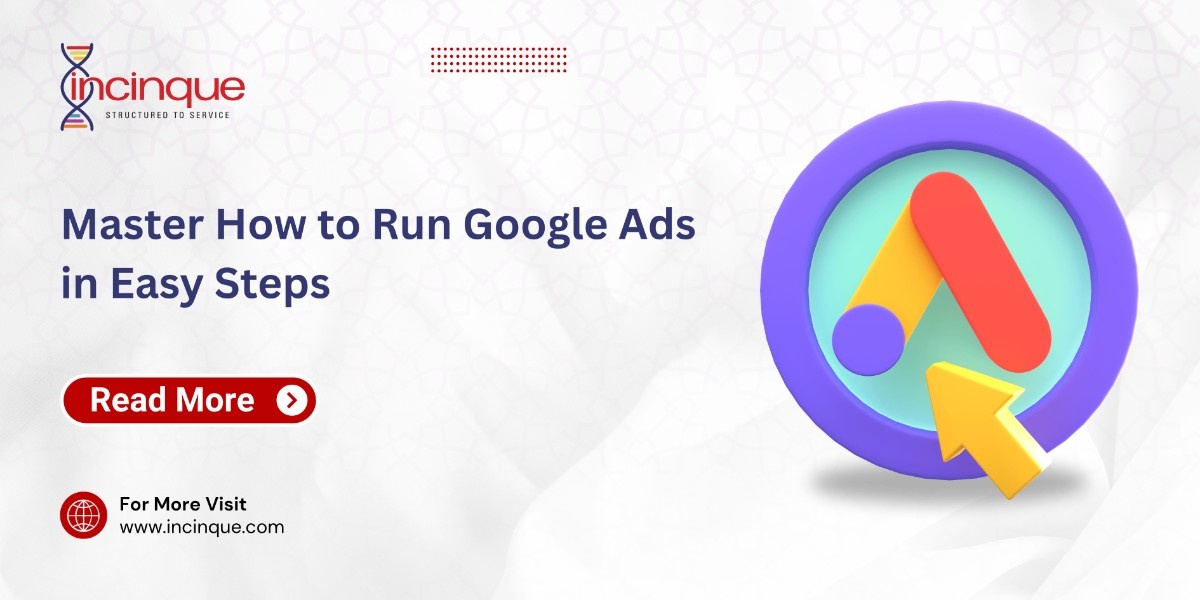
A 3D icon of the Google Ads logo in a purple circle, with a cursor clicking on it, representing paid search management.


Why Learning Google Ads Can Grow Your Business Online

In today’s digital world, having just a website or Instagram page isn’t enough. To grow online, you need to reach people when they’re searching. That’s where learning how to run Google Ads makes a big difference.

Whether you’re a small business owner or new to digital marketing, Google Ads helps you reach the right people at the right time. This beginner-friendly guide shows how to get started, even if you’ve never run an ad before.

What Is Google Ads? A Beginner’s Guide to Google Paid Ads

Google Ads is Google’s advertising platform that allows businesses to show paid ads on Google Search, YouTube, Gmail, and websites in the Display Network. It’s targeted, flexible, and trackable.

Main types of Google Ads campaigns include:

  • Search Ads: Show in Google search results.
  • Display Ads: Appear as image banners on websites.
  • Video Ads: Display on YouTube.
  • Shopping Ads: Great for promoting online products.

Select the campaign type based on your goal—sales, traffic, or brand awareness.

How to Create Google Ads: Step-by-Step for Beginners

Follow these simple steps if you’re wondering how to create Google Ads from scratch:

  1. Sign up: Go to ads.google.com and create an account.
  2. Pick your goal: Choose leads, traffic, or sales.
  3. Select ad type: Start with “Search” if you want website traffic.
  4. Set your audience: Target people by location, device, or interest.
  5. Keyword research: Use Google’s Keyword Planner to find the right search terms.
  6. Write your ad: Keep it clear and action-oriented.
  7. Set a budget: Start small—even ₹100/day works for testing.
  8. Track results: Connect to Google Analytics or Looker Studio.

Mistakes to Avoid When Learning How to Run Google Ads

Google Ads is easy to start, but small mistakes can lead to poor results. Watch out for these:

  • Skipping negative keywords: Wastes budget on unrelated traffic.
  • Overusing broad match: May lead to low-quality clicks.
  • No conversion tracking: You won’t know what’s working.
  • Set and forget: Ads need ongoing updates and testing.
  • Weak ad copy: Poor headlines reduce clicks.
  • Targeting too broadly: Less relevant audience, higher costs.
  • No keyword research: Guessing leads to poor performance.
  • Poor landing pages: Slow or unclear pages lower conversions.
  • Ignoring Quality Score: Raises your cost-per-click.
  • Skipping ad extensions: Misses extra space for clicks and info.

Even small changes in ads or targeting can improve your results.

Final Thoughts: You Can Learn How to Run Google Ads

You don’t need to be an expert to start. With the right steps and some testing, you can learn how to run Google Ads and get real results.

Need support? Incinque offers expert PPC services to help you build and manage effective campaigns.

Want to learn more? Visit Google Skillshop for free courses and certifications in Google Ads.


After-Hours Customer Support: Options for Businesses That Can’t Go Offline

Incinque customer support agent providing after-hours business chat assistance.

There is also a special frustration of contacting a company about an issue – be it a billing problem, technical difficulties, or anything else of importance – only to get a canned response saying that your representative is available on weekdays between 9 am and 5 pm.


If you are the customer, you’ll be frustrated. If you are the company, you’ll lose something valuable – whether it is a chance for further communication, an ongoing relationship with the client, or even a customer itself.

For those companies working in different time zones, those running subscriptions, providing an ecommerce platform, or operating within industries when problems don’t sleep until morning – being unavailable outside regular office hours means losing a competitive edge.


Here is an example of how this can actually work.

Automated Chatbots: Fast, Limited, and Often Frustrating

A chatbot is usually the very first thing that any business opts for. Chatbots are cheap to deploy, operate continuously, and deal with a remarkable number of queries — inquiries about an order status, personal data retrieval, FAQ responses, and basic technical support.


When dealing with low-complexity queries at great volume, a good chatbot definitely deserves a spot on your support list. However, from the moment the customer’s problem is not included in the decision tree, the experience becomes completely frustrating. People easily recognize chatbots and will tolerate them up until a certain limit.


The best use case for the bots is to handle low-complexity tasks as a first-level agent while the more serious problems are passed down to human operators. Relying solely on chatbots as a backup solution for high-valued clients would be a risky approach.

Email Support: Available, but Not Actually Real-Time

An email address for after-hour contact is certainly better than nothing. Slightly.


The key issue is one of managing expectations. Customers sending emails late in the evening hoping that they will be answered by morning are often disappointed. Time passes, frustrations increase, and when someone does finally contact them, their opinion of your company has been made.


E-mail is effective in documenting conversations and providing a backup system. It is not effective in providing immediate after-hour support to companies that depend on it.

On-Call Internal Staff: Expensive and Unsustainable

Businesses address the issue of after-hours availability by employing an internal rostering system whereby one employee is always in possession of the company telephone and another one is always available, technically speaking.


While this seems a feasible solution to begin with, this only works up until you implement it for about six months; then your employees get burned out. Gaps in coverage emerge. Quality employees leave because they do not have to work during night time anymore. Paying these people for their after-hours availability gets increasingly expensive.


On-call makes sense when addressing emergencies, but not in regard to after-hours support.

Outsourced After-Hours Support: The Model That Actually Scales

A support team outsourced purely for after-hours help is a very neat way of tackling the situation. Your clients get human representatives when you’re asleep and your internal teams are off duty and unable to help due to lack of knowledge about your products and customer communication protocol.


The most important factor distinguishing this solution from any generic phone answering services is contextual understanding of the nature of the calls your company receives. An outsourced call center which was set up properly will know your customer base and be able to solve their problems, not merely record their message and call back later.


The approach is particularly effective in cases of companies operating in the US or Europe whose customer support needs are provided from a different time zone.

What to Think About Before You Choose

Of course, the answer lies in your after-hours tickets, the nature of your customer problems, and what your customers really want from you.


A software-as-a-service company servicing enterprise clients will have different needs compared to an e-commerce company dealing with refund requests. But what they have in common is the fundamental truth: the companies that are available for their customers when they need them earn their loyalty more than those who aren’t.


After-hours availability is becoming a distinguishing factor, not a luxury.

After-Hours Support That Works Like Your Own Team

Incinque Business Solutions is proud to offer your company off-hour customer service for any company who simply can’t afford downtime. Our representatives are familiar with your product lines, your processes, and your voice so that the customers never feel the transition. Be it evening customer support, weekend customer care, or a complete 24-hour service, we work with what you need, not what others tell you need.

How to Write SEO-Friendly Blog Posts: detailed Guide

An illustration of a content creator writing at a desk, with screens and icons representing the process of crafting and publishing SEO-optimized blog posts.

Writing Blog Posts That Rank and Engage

If you’re trying to reach a wider audience online, learning how to write blogs that show up in search results  is essential. Creating content that both search engines and readers love isn’t as complicated as it sounds. With the right steps, you can write blogs that rank higher, bring organic traffic, and engage your readers from start to finish.

This guide will walk you through the key steps to master the art of writing that actually get seen  Search-optimized blog post without sounding robotic.

Why Learn How to Write SEO-Friendly Blog Posts

Many great blogs get lost on the internet simply because they aren’t optimized for search engines. Learning how to write Search-optimized blog post means:

  • Your posts show up on Google when people search
  • Your traffic grows naturally over time
  • You provide value while improving your ranking
  • You increase brand visibility and trust

Whether you’re a beginner or a content marketer, following SEO-friendly practices is a must in 2025’s digital landscape.

Need help finding keywords? Try tools like Ubersuggest or AnswerThePublic to explore real search terms your audience is using.


Steps to Write SEO Blog Posts That Rank Well-


Keyword Research Before You Write Search-optimized blog post

Before you even start writing, know what your audience is searching for. Use:

  • Google Keyword Planner
  • Ubersuggest
  • SEMrush

How to write SEO-friendly blog posts

  • Title and meta description
  • First paragraph
  • Headers (H2, H3)
  • Image alt text
  • URL slug

Write for Humans First, Search Engines Second

When figuring out how to write SEO-friendly blogs, remember: you’re writing for people, not just algorithms. Make your content:

  • Easy to scan with bullet points
  • Conversational using “you” and “we”
  • Valuable with examples and data

Structure Your SEO-Friendly Blog Posts Smartly

Search engines prefer structured content. To improve blog performance:

  • Use short, readable paragraphs
  • Include the focus keyword in headers
  • Add internal links to other blogs like Blog
  • Link externally to credible sites like Moz or Yoast

Also, write a compelling meta description (up to 140 characters) that includes your keyphrase to increase click-throughs.

Add Images and Optimize Them

Visuals matter for SEO and engagement. When learning how to write blogs, include:

  • Relevant images with keyword-rich alt text
  • Compressed images for faster load time
  • Infographics created using tools like Canva

Promote and Monitor Your Blog’s Performance

Publishing is just the beginning. Once you’ve written and shared your blog:

  • Promote on LinkedIn, Reddit, newsletters, and social media
  • Use Google Analytics and Google Search Console to monitor traffic
  • Track your rankings for how to write SEO-friendly blogs

Adjust content as needed based on performance data.

Conclusion

Mastering how to write SEO-friendly blog posts takes practice, but it’s worth the effort. Start with proper research, create helpful content for your readers, structure it with SEO in mind, and promote it smartly.

If you’re looking for real-world inspiration, visit the Blog page of Incinque to see how optimized blog content is crafted to attract and retain traffic.

SEO isn’t about shortcuts. It’s about creating smart, valuable content that deserves to be found  and your next blog post can do exactly that.

What Does a Logistics BPO Actually Do? A Plain-Language Breakdown

A logistics BPO support agent wearing a headset and working on a computer.

Anyone involved in the transportation or logistics industry has almost certainly encountered the term “logistics business process outsourcing” at least once in conversations where “efficiency” and “cost savings” are frequently mentioned but nobody bothers to find out what exactly happens inside the business processes.

Here’s a straight-to-the-point explanation of what happens.

A logistics BPO business assumes responsibility for certain back-end processes that a freight broker, trucking firm, or 3PL would normally perform within their organization. They do not drive the trucks; they do not make dispatch decisions; but they do manage all processes required to enable these functions – from data entry to billing and communications – taking up countless hours every day.

The Work That Doesn’t Move Freight but Has to Get Done

This is something that only comes into perspective when one is in the middle of it – a lot of logistics activities are not related to physical transport.

Consider a small freight brokerage company. On any particular day, their back office staff are doing everything from confirming loads, requesting proof of delivery, feeding the data into the TMS system, verifying the insurance certification of carriers, dealing with invoice disputes, and answering inquiries by carriers regarding payments.

None of the above activities physically transports anything. If they get delayed or messed up, it will have consequences like untimely invoicing, dissatisfied carriers, and billing issues that can take weeks to resolve.

This is precisely what logistics BPO services address.

What Specifically Gets Outsourced

The specific list can vary depending on the firm, however, the main tasks transferred to the logistics business process outsourcing usually include:

  • Freight billing and invoicing: Preparing invoices, calculating freight billings, resolving any issues with rates, and pursuing any payments past due. Freight billing mistakes happen quite often and result in significant costs – having a specialized team devoted to solving only this issue lowers the risks of making mistakes and expedites the process of collecting bills.
  • Documentation handling for proof-of-delivery: Collecting documentation from carriers, verifying it against shipping documentation, and filing the documentation. The task is repetitive in nature and can easily be outsourced.
  • Carrier onboarding and compliance: Creating carrier accounts in the system, obtaining W-9 form, verifying their insurance certificate and FMCSA authority. Every 3PL firm and broker require this process, which takes lots of time and isn’t worth senior employees’ attention.
  • Managing load boards: Placing loads, answering carrier questions, and dealing with coverage on open lanes. If you are working with high volumes, then alone this is enough reason to outsource.
  • Data Entry and Transportation Management System: Data entry and creation of reports for an updated transportation management system. This job may seem boring but is vital for business operations.
  • Customer service and carrier support: Dealing with incoming queries via phone and email and providing status updates on shipments. Outsourcing this function means you get additional coverage hours without hiring extra staff.

Why Freight Companies Are Actually Doing This

Cost savings is certainly one of them, but it’s not the main point. What is more important is that you redirect attention from administrative tasks to strategic activities.

Your in-house staff will have more time to establish contacts with carriers, develop new routes, and find solutions for complicated shipping issues.

Another benefit of working with a logistics BPO company is that they can easily adapt to changes in freight volume. In some cases, it may be hard for an in-house team to cope with the growing load and to hire new staff members.

This issue becomes especially acute for brokerages and 3PLs operating in fast-growing markets.

What to Look for in a Logistics BPO Partner

Not all BPOs have prior experience with freight. This consideration is more important than anyone could ever realize when deciding among different options.

If you find yourself working with a group of individuals who understand TMS systems, have prior knowledge of MC numbers, have implemented FMCSA compliance in the past, and have experience with freight billing, then the learning process will be accelerated, and mistakes will be kept to a minimum.

The learning curve for an experienced group is measured in weeks. The learning curve for a general BPO may take months.

Incinque Business Solutions: Logistics BPO That Knows Freight

In our business, at Incinque Business Solutions, logistics support services have never been a new addition to our portfolio. Rather, these are a set of services that are designed to address the practical issues that come with being in the logistics business. This includes freight billing, POD management, carrier onboarding, and load board assistance – among other things – all done by us as an extension of your company, not as a third-party you must manage.

How to Build a Brand: Craft Your Identity and Grow Online

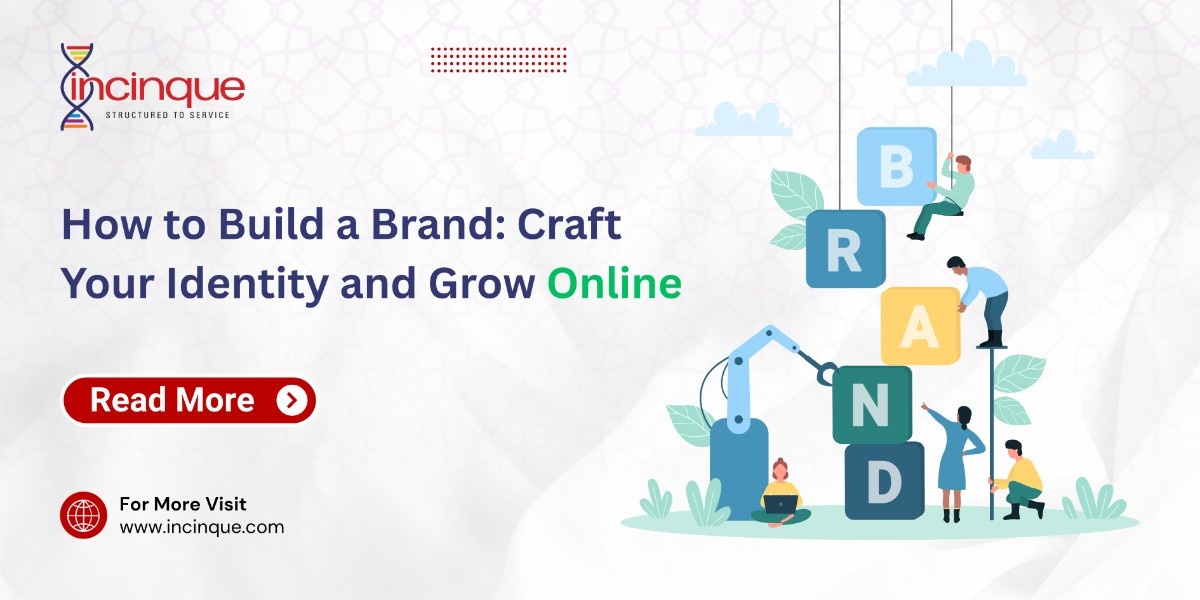
An illustration of a team working together to stack large blocks that spell "BRAND," representing the collaborative effort of building a strong brand identity.

Why Learning How to Build a Brand Matters for Everyone

In today’s competitive market, learning how to turn an idea into a brand isn’t just for big companies it’s for anyone who wants to stand out. Whether you’re launching a startup or offering freelance services, your brand tells your story before you say a word.

Your brand is what people think of when they see your name, logo, or even your colors. It tells your story without saying much.

Let’s dive into a simple, clear process to help you build a brand that people remember and trust.

What Does It Mean to Build a Brand?

Building a brand is more than just a logo or a name. It involves crafting an identity that emotionally connects with your audience. When people search for how to build a brand, they want a full blueprint not just design tips.

Start by defining your brand’s purpose. Ask yourself:

  • What problem do I solve?
  • Who am I helping?
  • What makes my approach different?

Once you have answers, you can move on to shaping your message.

Steps for how to build a Brand Successfully

Follow these essential steps:

  1. Define your brand mission and values: Know why your business exists. These values will guide every decision.
  2. Research your target audience: Building a brand without knowing your audience is like shooting in the dark.
  3. Study competitors: Learn what works (and what doesn’t) in your niche.
  4. Create a memorable brand name and tagline: Choose something easy to pronounce and meaningful.
  5. Design a strong visual identity: Colors, logos, and typography speak louder than words.
  6. Establish your brand voice: Should your tone be professional, playful, or something else?
  7. Be consistent across platforms: Consistency builds trust, and trust builds loyalty.

Online Tools to Help You Build a Brand

ways on how to build a brand? Here are some free and helpful tools:

Why It Matters

Still wondering why you need a brand? Here’s the truth: People buy stories, not just products.

Over time, a strong brand helps you:

  • Charge premium prices
  • Attract the right audience
  • Stand out in crowded markets
  • Build partnerships and trust

 Conclusion: Ready to Build Your Brand?

Now that you know how to build a brand, it’s time to take action. Every successful business started with the first step yours can too.

Branding isn’t about perfection. It’s about authenticity, clarity, and consistency. Whether you’re an entrepreneur, a freelancer, or a dreamer start building your brand today.

Incinque – Structured to Service is a creative agency that offers branding and logo design services Visit Incinque Business Solutions Pvt. Ltd.  instagram page which works as an creative agency helping brands grow smarter and stronger.

RPO vs. Staffing Agency vs. In-House HR: Which Is Right for Your Growth Stage?

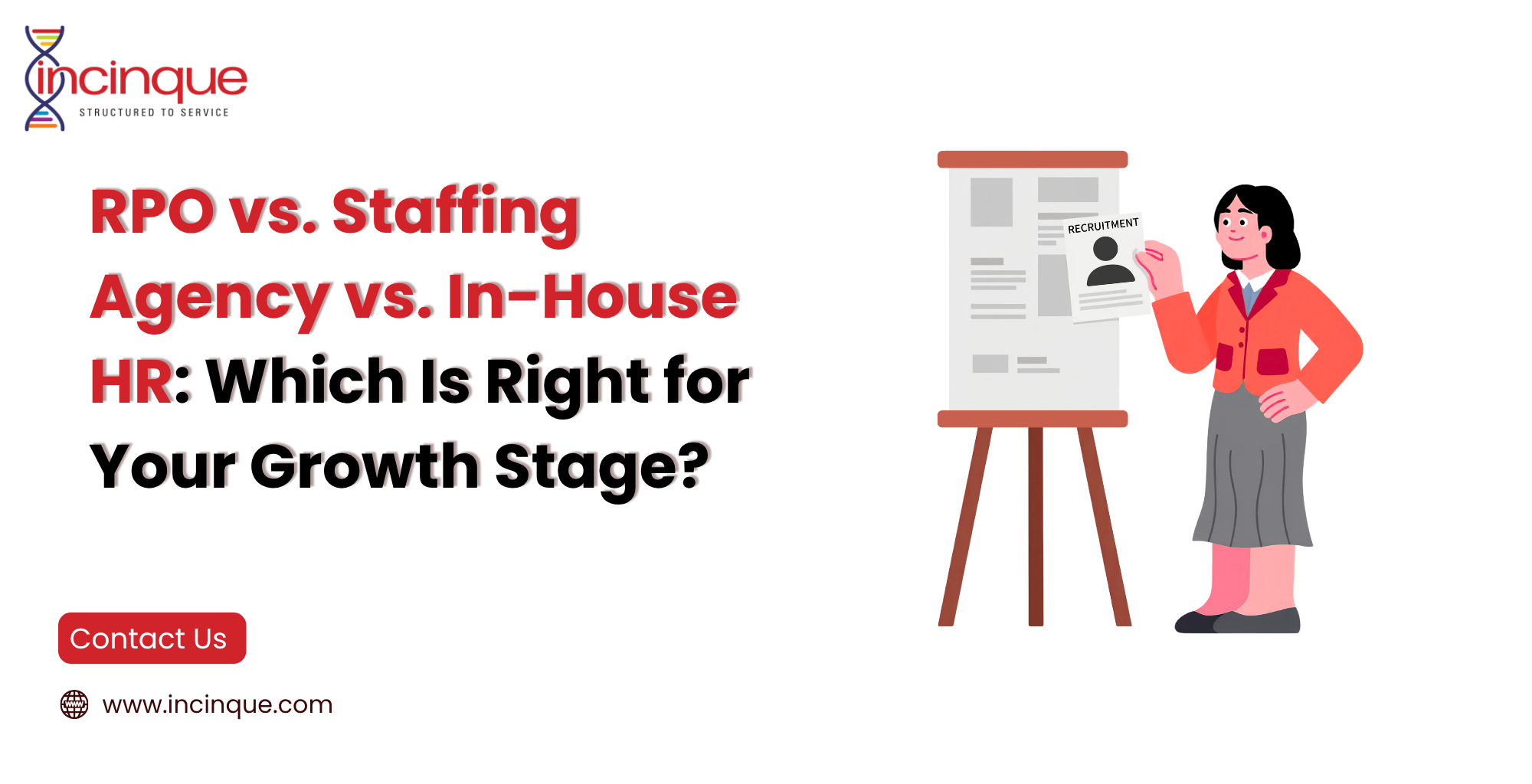
Incinque HR professional presenting recruitment strategy options on a board.

Hiring the right people is one of the most important things a growing business does, and also one of the most exhausting. At some point, almost every founder or HR leader hits the same wall: the current setup just isn’t scaling anymore.

Maybe your internal team is stretched too thin. Maybe a staffing agency filled three roles but none of them stuck. Maybe someone suggested RPO and you nodded along without being totally sure what it meant.

The three most common hiring models: Recruitment Process Outsourcing (RPO), staffing agencies, and in-house HR — each serve a real purpose. The trick is knowing which one your business actually needs right now.

In-House HR: Built for Stability, Not Always for Speed

An internal HR team makes sense when your company has reached a point of relative stability. You have a consistent headcount, a culture worth protecting, and hiring needs that are fairly predictable month to month.

In-house recruiters know your business from the inside. They understand who fits and who doesn’t. They’re present for onboarding, performance conversations, and everything in between.

But building that team takes time and money. A full-cycle recruiter’s salary, benefits, tools, and job board subscriptions add up before a single hire is made. And when hiring suddenly spikes, a two-person HR team can’t magically become ten.

Best for: Established companies with steady, low-to-moderate hiring volume and a strong focus on culture continuity.

Staffing Agencies: Fast Fill, Specific Fit

Staffing agencies exist for speed. You have an open role, they have a database of pre-vetted candidates, and the gap between “we need someone” and “someone starts Monday” shrinks considerably.

For contract roles, seasonal positions, or niche technical requirements, a good staffing agency is hard to beat. They handle sourcing, screening, and initial coordination freeing your team to focus on the final decision.

The trade-off? Per-placement fees typically range from 15% to 25% of the candidate’s first-year salary. Fill ten roles a year and that adds up quickly. And because the agency isn’t embedded in your culture or long-term strategy, cultural alignment often gets left behind.

Best for: Businesses with urgent, one-off, or contract-based hiring needs, especially when entering a new market or skill set where your sourcing reach is limited.

RPO: When Hiring Becomes a Business Function

Recruitment Process Outsourcing is what happens when you hand over part or all of your recruitment function to an external partner, not just individual roles, but the entire process.

An RPO provider acts as an extension of your HR team. They learn your employer brand, work within your existing ATS, build talent pipelines, and scale their resources up or down as your hiring volume changes.

For companies going through rapid expansion or hiring across multiple functions simultaneously, RPO delivers something neither in-house teams nor staffing agencies can: structured, data-driven hiring at a predictable cost.It should also be mentioned that recruitment process outsourcing (RPO) is no longer limited to big corporations, as start-ups and mid-level organizations have begun using it as a tool to attract employees while minimizing costs.

Best for: High-growth companies that want recruitment to function as a strategic capability, not just a reactive process.

So, Which Model Is Right for You?

  • If your hiring is predictable and culture-driven, invest in in-house HR.
  • If you need fast, targeted placements, a staffing agency gets the job done.
  • If you’re scaling fast and need a partner who grows with you, RPO is worth serious consideration.

Many businesses use a combination , in-house HR for strategic decisions, a staffing agency for urgent contract roles, and RPO for high-volume seasons. There’s no single right answer, only the right fit for where your business is today.

Find the Right Hiring Partner with Incinque Business Solutions

At Incinque Business Solutions, recruitment is one of our core strengths. We work with growing businesses across IT, finance, healthcare, and manufacturing to deliver talent solutions that align with where they’re headed, not just where they are today. In case you need direct hiring, contract staffing, or recruitment management services, we can provide you with the most competent candidates through our years of experience and extensive connections throughout the world. In case your company’s hiring process is not fulfilling your needs, then now is the time for a change.

How to Start Content Creation? Learn the Smartest Way to Begin

A 3D illustration of two people at a desk with microphones and a camera setup, representing the collaborative process of starting content creation.

The Power of Starting Content Creation in the Modern Market

In today’s online world, content creation isn’t just for influencers or marketers  it’s a must-have skill for anyone who wants to be heard, seen, or trusted. But how to start content crafting? That’s the question many beginners face.

Whether you’re a business owner, student, or freelancer, learning the basics of content creation can help you grow your personal brand, connect with your audience, and even generate income. In this guide, we’ll walk you through everything you need to know to get started in a way that’s easy to understand and apply.

Why You Should Learn How to Start Content Creation

If you’re wondering how to initiate content creation, you’re already thinking in the right direction. The world consumes digital content more than ever  blog posts, videos, podcasts, and graphics are everywhere. And behind each one, there’s a creator.

Content creation helps you:

  • Build credibility and trust
  • Reach potential customers or followers
  • Express ideas and share knowledge
  • Support SEO and marketing goals

Today, even small brands and solopreneurs are using content to attract attention and you can too.

How to Start Content Creation the Right Way

It begins with choosing the right type of content for your goals. Let’s break it down:

Decide What Type of Content You Want to Create

Do you enjoy writing, talking, designing, or filming? Your strengths will shape your content style. You can choose from:

  • Blog articles or newsletters
  • Social media posts
  • Videos or reels
  • Podcasts
  • Infographics or visual content

If you’re unsure, how to start content creation start with short-form content like Instagram carousels or LinkedIn posts to test what works for you.

For creating beautiful graphics or animations, try www.canva.com  it’s free, user-friendly, and offers thousands of templates ideal for beginners.

Know Your Audience First

Understanding who you’re talking to makes your content more relevant. Ask yourself:

  • Who is my ideal reader or viewer?
  • What problems do they face?
  • How can my content help or inspire them?

These steps are essential if you’re serious about learning how to commence content creation that truly connects.

Use Answer the Public to explore what your audience is searching for.

Plan Before You Post

Random posting rarely works. Use a simple content calendar to stay organized. Tools like Trello or Notion help structure your ideas and track progress.

When it comes to keyword planning, Ubersuggest offers free insights into content performance, keyword ideas, and competitor analysis  a useful platform when learning how to commence content creation.

Write or Design With a Purpose

Use simple language, short paragraphs, and visuals. Keep your brand tone consistent. Remember, your goal is to add value, not just post for the sake of it.

Use Grammarly to ensure your written content is clear, polished, and professional.

Conclusion: How to Start Content Creation Isn’t Hard It Just Needs a Plan

If you’ve been hesitating, this is your sign to begin. Learning from the initial stage is less about being perfect and more about being consistent. Start small. Pick a topic you care about. Share something useful.

Over time, your confidence, creativity, and content will grow. And if you need help turning ideas into action, visit Blog page of incinque  to guide you from planning to publishing.

The internet is full of noise. Be the voice that stands out.

shape
Our Clientele

Trusted by Leading Brands