
I N C I N Q U E

Loading

Winning the C-Suite: How to Secure Meetings with V-Level Executives

Incinque B2B appointment setters securing meetings with V-level executives.

Cutting through the clutter in an executive’s inbox is one of the most difficult things to do when it comes to sales in the B2B sphere. C-Suite members, Vice Presidents, and Directors are the key figures that shape the business strategies and budgets of a company. They simply don’t have the time for standard sales pitches and just “checking in”. To get into the roundtable meeting, you will have to completely overhaul your marketing strategy.

Here’s how you can adapt your marketing strategy to win over the top management.

Research Beyond the Basics

Outreach fails most of the time because it is shallow. Executives can tell when someone is using a template a mile away. Even before drafting an email, one needs to know the executive’s environment. This requires going past their LinkedIn profile to look at their firm’s annual reports, recent press releases, and quarterly earnings calls.

Find the “Big Three”: What are the executive’s top three objectives for the next fiscal year? When one is able to show that their product solves a problem that the executive has committed to solving, it becomes easier to sell. One can use sales intelligence to discover the executive’s challenges prior to making contact.

The Power of Peer-Level Communication

The executives are motivated by their peers, not their subordinates. When you talk to a vice president in a “five-minute” mode, it means that you have already told him that his time is more valuable than yours. Therefore, you should speak with the consultant’s tone.

You should use industry-specific language to show that you know their problems very well. For instance, when you deal with a finance controller from BFSI, talk about regulatory compliance and risk analytics, not efficiency. You will be perceived as an expert in their industry who can overcome all difficulties.

Hyper-Personalization: Quality Over Quantity

In the realm of C-suite engagement, one well-researched email beats a thousand automated ones. Begin your email with some personal information about them, like an interview in a podcast, writing an article, or receiving an award for their group.

The reason behind sending your email must be very clear, your intention is to prove that you have done sufficient research.

State your reasons for contacting this particular person and not another from the same team. It is much easier for an executive to spend ten minutes on the phone with you if they realize you spent an hour learning about their career path.

The “Brief and Bold” Approach

V-level executives are experts in concision. They can assess the relevance of any communication within seconds. Here is the structure your message must have to be successful:

  • Hook: An observation that applies to their business.
  • Problem: A problem in the industry they are most probably facing.
  • Proof: Brief reference to how you addressed this problem for a peer or competitor.
  • Ask: A minimal ask, like “exchange some ideas” instead of asking for a “60-minute demo.”

Leverage Multi-Channel Orchestration

Dependence on just email is also a bad move. Multi-channel marketing helps you get noticed without being annoying. If you send an email on Tuesday, then respond to one of their posts on LinkedIn on Thursday by leaving a relevant comment. Then, a week later, try sending a video or even a letter through regular mail that provides real value, like a customized report for your industry.

That will make you “hard to ignore” because you become recognizable for providing professional information rather than trying to push a sale.

Secure the Follow-Up

However, if you manage to arrange that first meeting, it doesn’t mean that you can now take some time off. In most cases, executive meetings end up with a message saying, “Send me more information.” Here comes the time for you to exhibit professionalism. Two hours after the call, send an email summarizing the meeting, next steps, and a personalized approach to proceed further.

Consistent follow-ups set apart high performers in closing deals from simple appointment setters. Here, you become a mentor rather than just another supplier.

In C-Suite marketing, success is all about quality rather than quantity. The key here is focusing on their needs before considering yours.

How a WordPress Website Designer Can Transform Your Brand

A large WordPress logo icon representing professional web design and development services.

WordPress Web Designer: Why Every Business Needs One

Having a strong online presence isn’t optional anymore it’s essential. Whether you’re a small business owner, a freelancer, or a startup founder, a skilled WordPress Web Designer can make a world of difference. Not only do they create beautiful sites, but they also ensure functionality, responsiveness, and SEO compatibility.


The Role of a WordPress Web Developer

Let’s start with the basics. A WordPress Site Creator specializes in crafting customized, user-friendly websites using the WordPress platform. They’re not just design experts they understand how layouts, performance, and branding work together to convert visitors into customers.

Moreover, they help with choosing the right theme, plugins, and tools to keep your website both attractive and fast. If you’re tired of clunky templates and broken elements, it’s time to call in a pro.


Key Benefits of Hiring a WordPress Website Designer

1. Customization That Reflects Your Brand

While pre-built themes exist, they rarely match your brand perfectly. A designer ensures that everything—from colors to font choices to layout reflects your identity.


2. Mobile-Responsive and SEO-Ready

With over 60% of users browsing on mobile, responsiveness is non-negotiable. Designers optimize your site for all devices and often include on-page SEO best practices.


3. Performance and Security

Speed and security matter. A slow-loading website can hurt both user experience and rankings. Designers implement optimization tools and secure plugins to ensure smooth operation.


Incinque Digital Marketing can help you manage your digital presence consistently and professionally.


Tools and Platforms Designers Use

Here are some tools on which many WordPress Website designers rely on:

These tools not only make design efficient but also align your site with search engine algorithms.


Choosing the Right WordPress Web Designer

Before hiring, ask for a portfolio. See if their past work fits your vision. Also, check reviews or testimonials. Communication matters too ensure they’re open to feedback and collaboration.


Conclusion: A WordPress Website Designer Is Your Digital Architect

In today’s fast-moving digital world, your website is more than just a place people visit it’s your brand’s home online. That’s why working with a skilled WordPress website designer is so important. Think of them as your digital architect. They don’t just create beautiful layouts they design user-friendly, functional, and goal-driven websites that reflect your brand and work seamlessly on any device.

A professional designer can help you:

  • Improve how your website looks and feels

  • Make sure it loads fast and is easy to use

  • Ensure it works well on mobile and desktop

  • Optimize it for search engines and conversions

If your current site feels outdated or isn’t helping your business grow, it may be time to rethink your web presence. A well-designed WordPress site can build trust with visitors, keep them engaged, and support your marketing goals.

If you’re looking for guidance, teams like Digital Marketing – Incinque specialize in helping businesses create clean, effective websites using WordPress. You can explore their work or connect with them through their social media profiles to see real examples and ideas.

In the end, the right designer doesn’t just build a site they help build your brand’s future online.

Why AI Lead Scoring Is the Smartest Move Your Sales Team Hasn’t Made Yet

Incinque marketer using a large magnet to attract and score high-quality leads.

Here’s a situation every sales manager knows: the pipeline looks healthy on paper, but the team is chasing the wrong people. Someone downloaded your whitepaper three times, so they got flagged as a hot lead, turns out they’re a student doing research. Meanwhile, a decision-maker at a mid-sized logistics company has quietly visited your pricing page four times this week and nobody has called them.


Traditional lead scoring was built to fix this problem. But honestly? It mostly replaced one kind of guesswork with another, just slower and more manual. At Incinque Business Solutions, we’ve worked with B2B sales teams across industries long enough to know that the problem isn’t the pipeline, it’s the prioritization.

The old way is costing you real deals

Conventional lead scoring assigns points based on rules someone set up once: job title gets 10 points, email open gets 5 points, demo request gets 30 points. The logic sounds reasonable. The problem is it’s static. It doesn’t teach. It doesn’t account for the thousand small signals that together tell you someone is about to buy or that they’re just browsing.


Sales reps end up burning hours on leads that look good in a spreadsheet but go nowhere. And the leads that actually convert? They sometimes slip through because they don’t fit the rigid template.


“The best leads don’t always look like the best leads — until it’s too late and a competitor closed them.”

What AI actually does differently

AI-powered lead scoring doesn’t replace your sales team’s instincts. It sharpens them. Instead of a static point system, machine learning models look at hundreds of behavioral and firmographic signals at once and they update their predictions in real time as new data comes in.


Think about what that looks like in practice. An AI model can weigh the combination of: a VP-level title, three visits to your case studies page, an email opened at 11pm, company headcount growth of 40% this year, and an industry that matches your top 10 customers. No human-built scoring rule catches all of that simultaneously. AI does, continuously.

The demand generation connection

This is where it gets especially valuable for demand generation teams. When your top-of-funnel is producing hundreds of MQLs a month, the real bottleneck isn’t generating leads, it’s knowing which ones are worth the attention. AI scoring lets your demand gen efforts feed directly into a smarter sales handoff.


Instead of passing every lead that hits a certain point threshold, you’re routing genuinely sales-ready prospects to your reps while keeping lower-scored leads in nurture sequences. Less wasted outreach. Better conversations. Shorter sales cycles.

What to get right before you implement

A few honest things to sort out before you flip the switch. First, your data quality matters more than the AI model you choose. Garbage in, garbage out, if your CRM is full of outdated contacts and inconsistent fields, the predictions will reflect that. Second, AI scoring works best when it’s tied to actual sales outcomes, not just marketing activity. The model needs to learn from closed-won deals, not just open rates. Third, it shouldn’t be a black box. Your reps should be able to see why a lead scored high, not just that it did.

The bottom line

AI lead scoring isn’t a magic button. But for B2B businesses running serious demand generation programs, it’s one of the highest-leverage investments you can make right now. Your pipeline deserves better than gut feel and point systems from 2019.


If you’re generating demand but struggling with conversion, the problem might not be your messaging, it might be who your team is calling first. That’s exactly the kind of problem Incinque Business Solutions helps solve; from building targeted pipelines to ensuring your sales team focuses on prospects that are actually ready to move.

SEO vs SEM – Which One Works Best for Your Business?

A vibrant graphic featuring a "VS" burst icon that highlights the comparison between SEO and SEM strategies for business growth.

Choosing Between SEO vs SEM for Online Visibility

In today’s digital-first world, every business wants to be found online but one key question often comes up: Organic vs. Paid Search Which is better?

Both bring traffic from search engines, but in different ways. Organic search relies on SEO and delivers long-term, trusted visibility without ongoing costs. Paid search (like Google Ads) gives you instant visibility but only while your ads are running.

Choosing the right one depends on your goals. For quick results, paid search is ideal. For steady, long-term growth, organic SEO is the way to go. In many cases, combining both gives the best results fast traction and lasting presence.

SEO vs SEM – What’s the Core Difference?

What Is SEO?

Search Engine Optimization (SEO) focuses on improving organic visibility using keywords, optimized content, and backlinks. SEO is:

  • Cost-effective over the long term
  • Great for building trust and credibility
  • Slower to show results but provides lasting benefits

What Is SEM?

Search Engine Marketing (SEM) involves paid methods like PPC (Pay-Per-Click) ads, delivering instant top-of-page visibility. SEM is:

  • Fast and measurable
  • Great for short-term campaigns or launches
  • Budget-sensitive and competitive

When comparing SEO and SEM, consider your timeline, budget, and goals.

Pros and Cons of SEO vs SEM for Businesses

Why Choose SEO?

If you want sustainable traffic and authority, SEO is ideal. Pros include:

  • Long-term visibility
  • Lower cost over time
  • Builds trust and organic growth

However, SEO requires consistent effort and time to see results.

Why Choose SEM?

SEM is best when you need quick results like during a launch or promotion. It allows you to:

  • Gain instant traffic
  • Test messages quickly
  • Control ad targeting and spend

But once the budget ends, visibility stops.

Can SEO and SEM Work Together?

Absolutely. Combining both often produces the best results. Here’s how:

  • Use SEM for quick visibility and keyword testing
  • Use SEO to build long-term authority and content presence
  • Leverage SEM data to refine your SEO strategy

Balancing both can drive short-term wins and long-term success.

Tools to Help You Decide Between SEO vs SEM

Here are tools that help you measure and adjust strategy:

Conclusion: Which One Should Your Business Choose?

Choosing between SEO and SEM really comes down to what you need right now and where you want your business to be in the long run. Search Engine Marketing (SEM) is great if you’re looking for quick visibility. It helps you get in front of potential customers fast, especially when launching a new product or trying to boost seasonal sales.

On the other hand, Search Engine Optimization (SEO) focuses on the long game. It’s all about building trust with search engines and users, so your website ranks organically and consistently brings in free traffic over time.

Want to understand how this works in the real world? Head over to the Blog page of incinque or particularly view Boost Your Online Reach with Effective SEO , where you’ll find  content strategies and campaigns that blend both SEO and SEM to deliver performance that lasts.

The Hidden Cost of In-House Operations vs. Outsourcing

Incinque customer support representative managing operations at a desktop computer.

Most business owners who decide to keep operations in-house aren’t making a bad decision, they’re making an incomplete one. They see the outsourcing quote and compare it against the salary of one employee. That math almost always makes in-house look cheaper. The problem is it’s the wrong math.

The real cost of running a team internally goes far beyond the monthly payroll. There are costs that never show up cleanly on a P&L and those are the ones that quietly drain your margins year after year.

What You See vs. What You’re Actually Paying

Take a customer support team as an example. You hire five agents at $35,000 a year each. On paper, that’s $175,000 annually. But run through the full picture:

Employer-side payroll taxes add roughly 7–10% on top of every salary. Benefits, such as health insurance, paid leave, sick days, can push another 20–30%. Then there’s office space, hardware, software licences, and IT infrastructure.

Before you’ve placed a single call, that $175,000 team is probably costing you $250,000–$280,000. And that’s before anyone quits.

Turnover: The Cost Nobody Budgets For

Staff attrition is one of the most expensive things that can happen to an operations team, and it happens constantly. In customer-facing and back-office roles, annual turnover rates of 25–40% are not unusual.

Each departure triggers a cycle: job postings, HR time, interviews, background checks, notice periods, onboarding, and three to six months before the replacement is actually productive. Research in this area consistently puts replacement costs at 50–200% of an employee’s annual salary, depending on the role.

Outsourcing partners absorb this entirely. When a member of their team leaves, it’s their problem to solve, not yours. Your service levels don’t dip. Your managers don’t spend a week re-interviewing.

Management Bandwidth Is Not Free

Every hour your senior leadership spends managing an in-house operations team is an hour not spent on growth, product, or client relationships. This opportunity cost almost never gets quantified in the build-vs-buy conversation.

Performance reviews, shift scheduling, compliance training, conflict resolution, these are real time sinks. A mid-sized in-house ops team can consume 15–20 hours of management attention per week. Price that at your leadership’s effective hourly rate and the number becomes sobering.

Scaling Cuts Both Ways

In-house operations are expensive to scale up and even more expensive to scale down. If you win a big contract and need double the capacity in 30 days, you’re looking at a hiring crunch that will almost certainly result in rushed decisions and undertrained staff.

If that contract ends six months later, you’re overstaffed and facing difficult conversations. Severance, legal exposure, and morale damage to the team that stays, and none of this appears in the original cost model.

Outsourcing lets you flex capacity without absorbing headcount risk. You pay for what you use, and you adjust as business conditions change.

So When Does In-House Actually Win?

There are functions where internal teams genuinely make sense — typically those tied to your core product, proprietary IP, or company culture. Senior strategy, product development, and executive leadership are rarely good outsourcing candidates.

But routine, process-driven functions like demand generation, customer support, logistics coordination, quality assurance, back-office processing, are exactly where outsourcing partners earn their keep. These are repeatable processes that specialist teams are built to run efficiently at scale.

The Honest Calculation

Before your next “let’s keep it in-house” decision, run the real numbers: salary, plus payroll taxes, plus benefits, plus infrastructure, plus turnover costs, plus management time. Then compare that against what a specialist outsourcing partner charges, and what they bring in expertise, scalability, and accountability.

Most businesses that do this exercise don’t abandon internal teams entirely. But they do stop treating outsourcing as a cost, and start treating it as the leverage it actually is.

If your operations are costing more than they should, now’s a good time to explore what’s possible. Reach out to Incinque Business Solutions,  the conversation is free.

Video Editing for Businesses: Why It’s More Than Just Cutting Clips

An illustration of a professional editing video content on a computer monitor, showcasing a timeline and playback interface to represent complex production work beyond simple cutting.


Video Editing for Businesses: Why It’s More Than Just Cutting Clips

In the digital age, video content dominates the digital platform. From Instagram reels to YouTube explainers, video is everywhere. But simply recording footage isn’t enough. Video editing for businesses plays a critical role in shaping brand perception, engaging audiences, and driving conversions. It’s far more than just trimming scenes—it’s about crafting a compelling story that connects with the audience.

Why Video Editing for Businesses Matters

If you’re using video without professional editing, you’re likely missing out on major opportunities. Here’s why it’s very important:

  • Captures Attention Fast: Professionally edited videos hook viewers in the first few seconds.
  • Builds Trust: High-quality videos reflect credibility and professionalism.
  • Increases Conversions: According to Wyzowl’s video marketing stats, 89% of consumers say video has convinced them to buy a product.
  • Boosts SEO: Search engines favor video content, especially when it’s engaging and optimized.

And to make your content work even harder, combine professional editing with a strong digital strategy like the one we offer at Incinque Digital Marketing.

It’s Not Just Cutting Clips—It’s Storytelling

Good editing can turn basic footage into an emotional, action-driving narrative. Think of editing as a creative process where you:

  • Craft a clear message
  • Add transitions, text, and music for impact
  • Use pacing to hold viewer attention
  • Maintain brand consistency

When your content aligns with your business goals, video editing for businesses becomes a powerful marketing asset.

Key Elements of Effective Business Video Editing

1. Branding

Colors, fonts, logos, tone—make sure every video reflects your brand identity.

2. Captions and Subtitles

With many users watching videos on mute, adding captions boosts engagement and accessibility.

3. Optimized Length

Short, snappy videos perform best on social media. Long-form videos might become monotonous, but work well for tutorials or storytelling.

4. Call to Action

Every video should prompt the viewer to do something—visit your site, make a call, subscribe, etc.

Tools like Adobe Premiere Pro and Final Cut Pro are great, but the real magic lies in how you use them.

Integrate Video Editing with Strategy

Editing without purpose is like sailing without a compass. That’s why it’s crucial to pair video editing with a marketing strategy. At Incinque, we combine visuals with performance—ensuring your videos are seen and acted on.

Conclusion

Video editing for businesses is no longer optional—it’s essential. More than trimming clips, it’s about delivering a polished, persuasive message that aligns with your brand and motivates your audience.

When done right, it builds trust, drives traffic, and generates real results. Want to elevate your video content? Let the team at Incinque help you turn raw footage into results.

Boost Your Online Presence with Expert Web Design

A bar chart with a rocket ship launching from the highest bar, symbolizing rapid business growth and improved digital visibility through expert web design.

Boost Your Online Presence with Expert Web Design

In the digital age, your website is the first impression your business makes. A cluttered or outdated design might make users lose interest, while a clean, professional layout builds trust and encourages engagement. That’s why it’s essential to boost your online presence with expert web design—a strategic approach that merges appearance with functionality.

Why Expert Web Design Matters

Professional web design is about more than just appearance—it delivers function, results, and the following benefits:

  • Builds Trust: A sleek, modern website showcases professionalism and builds instant credibility.
  • Boosts Search Visibility: According to Moz, search engines prioritize sites with strong structure and mobile optimization.
  • Enhances User Experience: Smooth navigation and intuitive design keep visitors browsing longer.
  • Drives Conversions: Effective design guides users toward actions like calls, purchases, sign-ups, and more.

Need help connecting web design with marketing? Check out our full-stack digital marketing services at Incinque.

Key Features of Expert Web Design

Here’s what separates average websites from truly effective ones:

1. Mobile Optimization

Over 60% of web traffic now comes from mobile devices (Statista). Your site must look and function perfectly on every screen size.

2. Fast Loading Speed

Pages that load in under 3 seconds dramatically reduce bounce rates. Clean coding and optimized media are essential.

3. Smart Structure & Visual Hierarchy

Users shouldn’t think about what to click next—it should be intuitive. Fonts, colors, and layouts must guide them seamlessly.

4. Clear CTAs (Call-to-Action)

Want users to sign up, buy, or call? Design CTAs to be both noticeable and action-oriented.

Real-World Impact: A Case Study

According to a Forbes article, companies with updated, professional websites see double the conversions compared to those with outdated designs. That’s the power of investing in good design—it impacts your bottom line.

Connect Design with Strategy

Design is just one element of your digital journey. To boost your online presence with expert web design, integrate it with a powerful marketing strategy—SEO, paid ads, content marketing, and more.

At Incinque, we do just that. Our digital marketing team crafts tailored campaigns that make your website not just functional but unstoppable.

Conclusion

It’s not enough to simply have a website. To thrive, grow, and stand out online, you must boost your online presence with expert web design that reflects your brand, resonates with your audience, and drives results. Whether you’re a startup or an established brand, investing in expert web design is a powerful step toward digital success.

Let your website work for you—not against you. Want to take the next step? Reach out today and start building a site that actually performs.

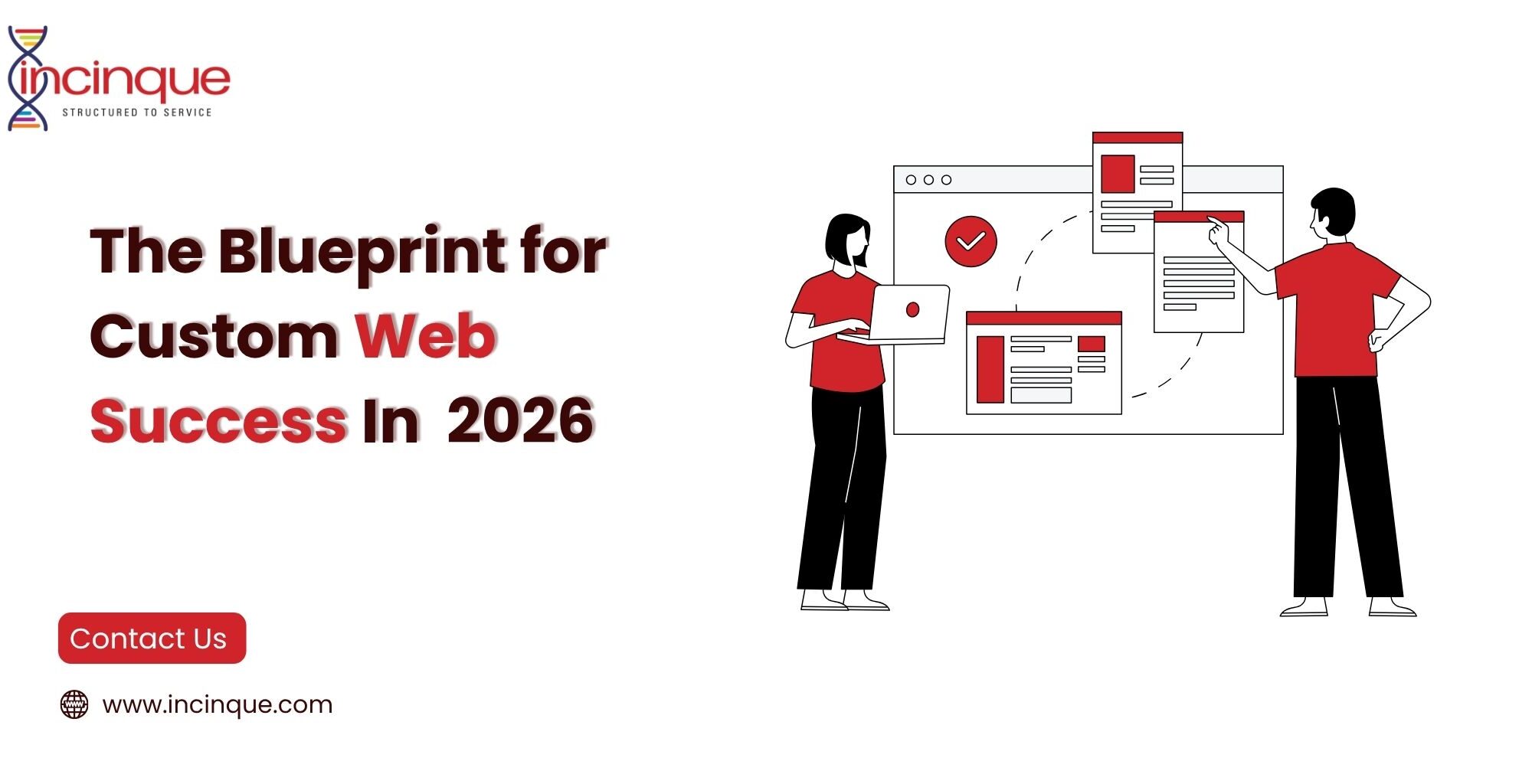
Navigating Digital Success: A 2026 Guide to Custom Web Architecture

Incinque web development team planning a custom website blueprint on a visual dashboard.

In the current digital environment, a website is no longer just a digital business card or a digital brochure. A website is now the central nervous system of modern business. As we progress further into 2026, the divide between organizations that utilize generic templates and organizations that utilize custom web development is growing. For organizations to remain competitive in the market, there is a need to use high-performance digital tools that not only “look good” but also help organizations grow.

To create a powerful online presence, there is a need for a strategy. Here is why custom web development is the only option for organizations seeking to achieve business success.

Performance and Speed as a Conversion Tool

Patience of internet users is at an all-time low. Studies have shown that internet users are increasingly inclined to leave a website if the time taken to download the website exceeds two seconds. Generic templates are notorious for being filled with unnecessary code and heavy scripts.

Custom web development makes it possible for developers to follow a “clean code” methodology. By developing a website from scratch, developers can guarantee that each piece of code is necessary. This results in a lean structure of the code, allowing the site to be loaded in nearly an instant. Having instant load time not only ensures the user’s interest is retained but also meets the requirements of Google’s Core Web Vitals for achieving higher ranking positions.

Scalability for an Evolving Business

One of the biggest pitfalls for an expanding business is growing beyond its website. Template-based sites often reach a “glass ceiling” beyond which it is impossible to add new features, such as a custom client area or a complex booking system, without compromising the current layout.

Custom development provides a flexible base from which a business can operate. Whether you are a new business looking to expand your list of provided services, or an existing business looking to integrate a new type of CRM system into your business, a custom-designed website can help your business grow. It can make it possible for seamless integrations into other systems, allowing your online business to grow in the same way as your brick and mortar business.

Essential Tools for Modern Development

To attain such high levels of performance by 2026, the tech stack used for development needs to be modern and optimized for high performance. Today’s best developers are adopting:

  • Next.js and SvelteKit: These libraries are de facto for SEO optimization as they provide server-side rendering out of the box, which allows search engines to view the page as fully rendered and available at all times.
  • AI-Native Code Editors: These tools, such as Cursor and GitHub Copilot, are now an essential part of any modern stack for real-time debugging and creating clean and complex logic without having to resort to the overhead of the previous generation.
  • Advanced Image Optimization: Using new formats such as AVIF and WebP has now become a necessity for maintaining high performance scores for all devices.

Professional Tips for a Competitive Edge

Aside from that, it is the strategy behind the code that makes for a high-converting user experience.

  • Accessibility (A11y) Integration: By 2026, accessibility is not only a necessity but also a search engine optimization booster. A website that is easily crawled by a screen reader will be easily crawled by Google’s search bots.
  • Semantic HTML: Using clean and descriptive HTML tags will allow search engines to categorize your content correctly, thus giving you a competitive edge in the SERPs.
  • Mobile-First Design: With mobile traffic reigning supreme in the market, making sure buttons are “thumb-friendly” and the layout is perfectly responsive is non-negotiable in reducing bounce rates.

Superior Security and Data Protection

In recent times, security has become a major concern owing to advanced security threats. Popular website builders are prime targets since a single vulnerability has the potential to attack thousands of websites. Custom-built websites offer unique architecture, which is more secure by design. You get access to advanced security features and protocols that suit your specific business requirements, providing security for your valuable data and intellectual property.

Partner with Incinque Business Solutions

In order to thrive in this complex world of web development, what you need is a company that understands the symbiotic relationship of technology and business strategy. Incinque Business Solutions is a world leader in providing cutting-edge, cost-effective, and high-quality digital solutions. We specialize in creating custom web development solutions that are technologically accurate, secure, and help you reach new heights on your growth chart.

Are you looking for a cutting-edge data-driven growth platform? Do you need a unified integration of all your digital tools? Incinque Business Solution acts as an extension of your team to make your business easier and more streamlined. We don’t just build web sites; we build digital assets that help you succeed in an ever-changing business landscape. Get in touch with Incinque today and turn your digital vision into a powerful reality.

Importance of Content Creation Course

An artistic illustration of two content creators high-fiving next to a camera on a tripod, with a thumbs-up speech bubble representing positive engagement and successful production.

The Real Importance of Content Creation Course for Career Growth

In today’s fast-moving digital world, content is more than just a buzzword it’s a necessity. Whether you’re a freelancer, business owner, or someone looking to grow online, understanding how to create high-quality, engaging content is crucial. That’s why the importance of content creation course cannot be overstated.

These courses are no longer just for marketers. They’re for anyone who wants to tell better stories, increase visibility, and thrive in the content-driven economy.

Let’s break down why learning content creation can be a major turning point in your professional journey.

1. Establish a Strong Online Presence

A good content creation course teaches you how to communicate effectively through blogs, videos, social media posts, and more. You’ll learn how to shape your message for different platforms, design attention-grabbing visuals, and write copy that resonates with your target audience.

In today’s market, your digital presence is your resume. These courses help you present yourself and your ideas professionally.

2. Stay Ahead of Digital Trends

The digital space evolves quickly. Reels, shorts, carousels, AI-powered content new tools and formats are introduced every month. Enrolling in a content creation course ensures you’re always in tune with the latest trends and strategies. Many leading platforms like Skillshare and HubSpot Academy offer updated content creation training taught by professionals who are active in the industry.

3. Expand Career and Freelance Opportunities

Brands, startups, and agencies are always on the lookout for people who can create scroll-stopping content. With a certification or experience from a content creation course, you can boost your portfolio and credibility.

Whether you’re applying for a marketing role or offering your services as a freelancer, knowing how to create valuable content makes you highly marketable and opens doors to better-paying opportunities.

4. Strengthen Your Personal Brand

One of the biggest benefits of learning content creation is that it helps you define and grow your personal brand. Instead of randomly posting on social media, you’ll learn to create with intention, clarity, and consistency.

It helps build trust, increase visibility, and make you stand out whether you’re promoting a side hustle, building an audience, or positioning yourself as an expert in your field.

5. Learn to Think Like a Creator

Content isn’t just about creativity it’s about strategy. A content creation course teaches you how to plan ahead with calendars, understand what your audience wants, track performance through analytics, and optimize for engagement.

You’ll start to create with purpose not just for likes, but for impact.

Conclusion

In a content-first digital world, investing in your skills is one of the smartest decisions you can make. The importance of content creation course goes beyond social media posts it shapes your confidence, visibility, and career growth. For example,
Incinque content creation strategy leads to more engagement and growth.

From mastering strategy to gaining real-world tools, these courses empower you to become a content creator with impact. And as more industries shift online, those who can create compelling, meaningful content will always be in demand.

Explore hands on learning through platforms like Skillshare or HubSpot Academy, and start turning your ideas into influence.

How Global Recruitment Is Shaping the Workforce of 2026

Incinque HR team managing global recruitment and international talent profiles on a digital dashboard.

The world of business has experienced a paradigm shift as we enter 2026. For large corporations, the “hiring for volume” age is officially over, and the “era of precision talent alignment” has begun. As artificial intelligence transitions from being a complementary resource to a self-sufficient team player, the role of human resources has never been more complex and vital. Multinational Corporations (MNCs) are no longer searching for warm bodies to fill their seats; they are now looking for specialized “human-in-the-loop” professionals who understand the intricacies of an AI-powered economy.

This new reality has made the process of recruiting top talent even more challenging and high-stakes. In this scenario, the key to success for corporations is to focus on Global recruitment solutions for MNCs to ensure that their talent pool is not only large but also optimized.

The Death of the Traditional Resume

In 2026, the traditional resume has become a relic of the past due to the advent of Generative AI. With candidates using advanced tools to “polish” their resume and even automate their interview answers, the traditional resume has become obsolete.

Contemporary talent hunting involves “Bio-Data” and in-depth technical analysis that evaluates the candidate’s ability to adapt and think creatively. Employers seek people who not only have knowledge of a particular software application but can also learn the next three versions of it on the fly. By using Global recruitment solutions for MNCs, companies can tap into proprietary evaluation models that pierce through the “AI noise” to identify authentic, high-quality candidates that cannot be detected by degrees alone.

The Emergence of the “AI-Human” Hybrid Team

One of the most characteristic features of 2026 is the incorporation of AI into the recruitment process. We are witnessing the “Recruiter’s AI Twin” taking care of the mundane work—market research, initial screening, and monitoring the database—so that human recruiters can exclusively concentrate on the “human” aspect of the job: empathy, cultural alignment, and negotiation.

But this technology also poses a fresh set of challenges, such as bias in algorithms and “technostress” among applicants. To address these, companies need to adopt human-centric governance. Leading enterprises are seeking Global recruitment solutions for MNCs that offer a balanced “Human-plus-Machine” approach, ensuring the candidate experience remains warm and reflective of the company’s employer brand.

Unraveling the Puzzle of Transparency and Compliance

The current regulatory environment for international recruitment has become a puzzle of pay transparency laws, data privacy regulations, and AI regulation laws, especially in the European and North American regions. In 2026, non-compliance with these regional nuances is no longer a risk of litigation—it’s a risk to the brand. The best and brightest talent now require extreme transparency about data usage and salary determination.

The puzzle of regional regulations and the need to build a global workforce across multiple continents requires a sophisticated infrastructure. The right partners who offer Global Recruitment Solutions for MNCs offer the “regulatory shield” that organizations require. They ensure that all contracts, interviews, and data points collected are in line with the most stringent international regulations, safeguarding the organization from costly litigation and reputational harm.

The GCC: From Cost Centers to Innovation Hubs

The idea of the Global Capability Center (GCC) has transformed. In the past, the GCC was perceived as an offshore cost center. In 2026, the GCC is the innovation engine. Whether it’s a tech hub in Hyderabad or a fintech innovation center in Eastern Europe, this is where the most innovative work is being done.

The problem for MNCs is how to create these hubs with the correct cultural “sync.” It’s not sufficient to simply hire local talent; you need to hire local leaders who can interpret the global vision into a regional reality. Identifying these “bridge” leaders is the central value proposition of premium Global recruitment solutions for MNCs, which rely on extensive industry connections to identify executives who can effectively lead remote, hybrid, and highly diverse teams.

Onboarding as a Competitive Advantage

In 2026, the first 90 days of an employee’s employment are recognized as the most important period for ROI. With the increasing popularity of the “Bleisure” lifestyle and global mobility, employees demand a seamless transition. When the onboarding process is disjointed, the “quality of hire” is compromised, and early-stage turnover rises.

Optimized onboarding processes extend well beyond simply providing a new employee with a laptop and access to the system. It means incorporating the new employee into the company’s “social fabric” via digital twins, virtual reality office tours, and mentorship programs. By concentrating on the experience of entry, companies can guarantee that their new talent is productive and loyal from day one, rather than languishing for months lost in a global giant bureaucracy.

Conclusion: Future-Proofing Your Workforce

The winners of the talent war in 2026 will not be the companies that hire the fastest, but the ones that hire the smartest. To succeed in today’s world, it is necessary to strike a balance between agentic AI, ethics, and human empathy. As companies opt for more modular and project-based workforce structures, the need for a stable and global talent pipeline has never been more pressing.

For companies that aim to remain “in sync” with the fast pace of change, the Incinque Business Solutions offers the industry expertise and scalable hiring solutions required to convert human capital into a verifiable growth engine. By leveraging cutting-edge sourcing technology and an unswerving focus on the “perfect fit,” they can help companies succeed in the world of 2026 and construct the leadership teams of the future.

shape
Our Clientele

Trusted by Leading Brands